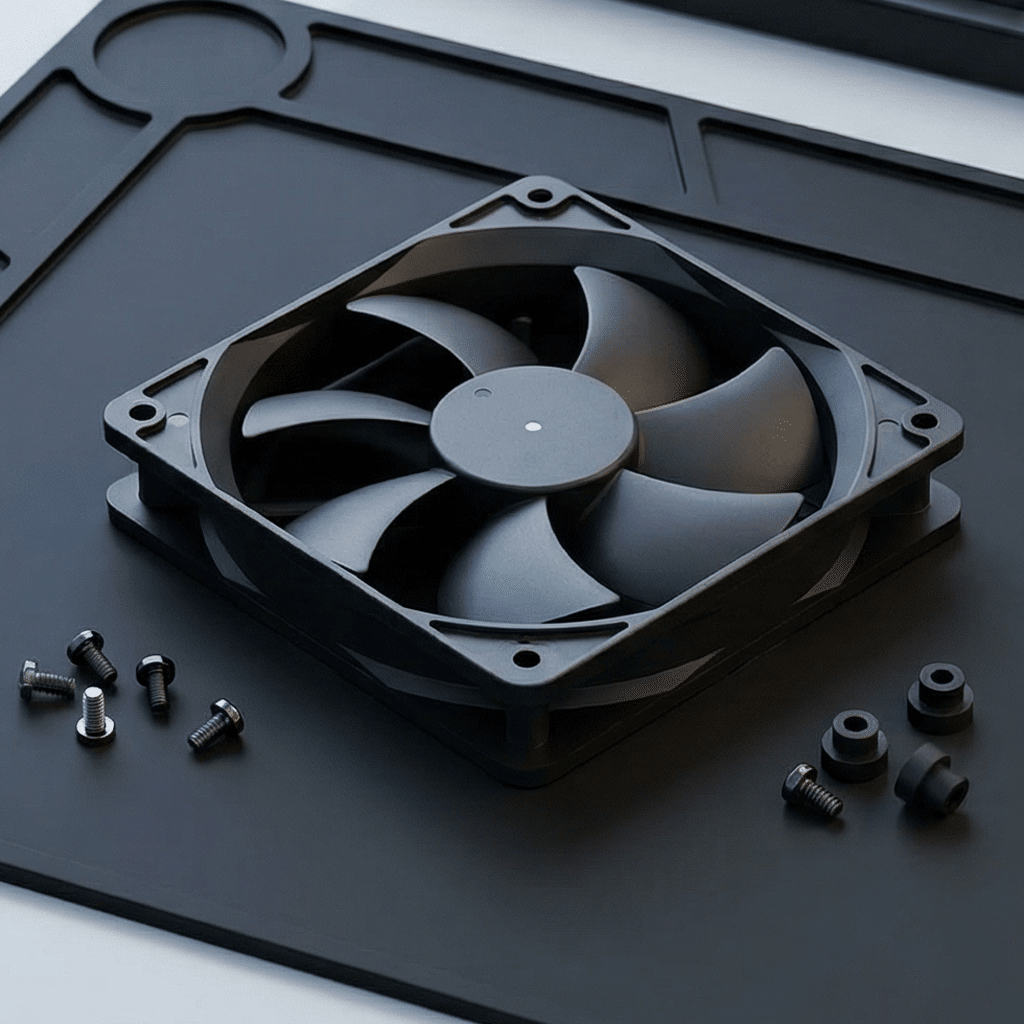
Axial Fan vs Centrifugal Fan | Complete Industrial Cooling Guide
Axial Fan vs Centrifugal Fan: Which One Is Better for Industrial Cooling?
Selecting the right cooling fan is one of the most important decisions when designing industrial equipment. Whether you are developing a telecommunications cabinet, server rack, energy storage system, industrial automation controller, medical device, or EV charging station, choosing between an axial fan and a centrifugal fan directly impacts cooling performance, energy efficiency, equipment lifespan, and operating costs.
Many engineers and purchasing managers focus only on airflow ratings. In reality, airflow is just one part of the equation. Static pressure, installation space, operating environment, noise level, power consumption, and maintenance requirements all influence which fan performs better in a specific application.
This guide compares axial fans vs centrifugal fans from an engineering perspective. You'll learn how each fan works, where each design performs best, and how to select the right solution for your industrial cooling project.
Table of Contents
- What Is an Axial Fan?
- What Is a Centrifugal Fan?
- Axial Fan vs Centrifugal Fan Comparison
- Airflow Performance
- Static Pressure Performance
- Energy Efficiency
- Noise Comparison
- Industrial Applications
- Selection Guide
- Frequently Asked Questions
Why Choosing the Right Industrial Cooling Fan Matters
Industrial equipment generates heat continuously during operation. If that heat cannot be removed efficiently, internal temperatures rise rapidly, reducing component lifespan and increasing the risk of unexpected system failures. Effective thermal management helps maintain stable operating temperatures, improves reliability, and lowers maintenance costs over the life of the equipment.
Although both axial fans and centrifugal fans move air, they are designed for different operating conditions. Choosing the wrong fan may result in insufficient cooling, excessive noise, unnecessary energy consumption, or higher operating costs.
Imagine a telecom cabinet installed in the Middle East where ambient temperatures often exceed 50°C (122°F). An axial fan may provide excellent airflow in an open environment, but if the cabinet contains dense filters or heat exchangers that create high airflow resistance, a centrifugal fan may maintain cooling performance more effectively because it can generate significantly higher static pressure.
What Is an Axial Fan?
An axial fan moves air parallel to the rotating shaft. The fan blades generate airflow in a straight direction, making this design highly effective for applications that require moving large volumes of air with minimal resistance.
Because of their simple construction, axial fans are widely used in industrial cooling systems where space is limited and unrestricted airflow is available.
How Does an Axial Fan Work?
The motor rotates multiple blades mounted around a central hub. As the blades spin, they create pressure differences that pull air in from one side and push it directly out the opposite side.
Advantages of Axial Fans
- High airflow (CFM)
- Compact design
- Lower manufacturing cost
- Simple installation
- Lower power consumption in low-resistance environments
- Suitable for continuous cooling applications
Limitations
- Lower static pressure
- Performance decreases when airflow is blocked
- Less suitable for ducted systems
- Cooling efficiency drops in restrictive airflow paths
Axial fans are commonly installed inside industrial control cabinets where fresh air can flow freely through ventilation openings. In these applications, maximizing airflow is usually more important than generating high pressure.
What Is a Centrifugal Fan?
Unlike an axial fan, a centrifugal fan draws air into the center of the impeller and redirects it outward at a 90-degree angle using centrifugal force. This design produces significantly higher static pressure, making centrifugal fans ideal for systems with airflow restrictions.
Because they can overcome resistance more effectively, centrifugal fans are widely used in HVAC systems, filtration equipment, heat exchangers, battery cooling systems, and industrial ventilation.
How Does a Centrifugal Fan Work?
Air enters the fan housing through the inlet. As the impeller rotates, centrifugal force accelerates the air outward before directing it into the discharge outlet. This process creates higher pressure compared with an axial fan.
Advantages of Centrifugal Fans
- High static pressure
- Excellent performance in ducted systems
- Stable airflow under heavy resistance
- Suitable for filtration systems
- Reliable cooling for enclosed equipment
Limitations
- Larger physical size
- Higher manufacturing cost
- More complex installation
- Usually heavier than axial fans
Battery energy storage systems often contain multiple filters, narrow airflow channels, and dense battery modules. In these environments, centrifugal fans maintain consistent airflow despite the higher resistance inside the enclosure.
Axial Fan vs Centrifugal Fan: A Side-by-Side Comparison
Both fan types are designed to move air, but they achieve this goal in very different ways. An axial fan is optimized for moving large volumes of air in open spaces with minimal airflow resistance. A centrifugal fan, on the other hand, is engineered to generate higher static pressure, making it ideal for enclosed systems, filters, ducts, and heat sinks.
Instead of asking which fan is better, the more practical question is: Which fan is better for your specific cooling application?
| Feature | Axial Fan | Centrifugal Fan |
|---|---|---|
| Airflow (CFM) | ★★★★★ High | ★★★☆☆ Moderate |
| Static Pressure | ★★☆☆☆ Low | ★★★★★ Excellent |
| Noise Level | Generally Lower | Moderate |
| Power Consumption | Lower in Open Systems | Higher Under Heavy Load |
| Installation | Simple | More Complex |
| Overall Size | Compact | Larger |
| Airflow Direction | Straight Through | 90° Direction Change |
| Cost | Lower | Higher |
| Best Application | Open Cooling | Restricted Airflow |
| Typical Industries | Electronics, Servers, Automation | HVAC, Filtration, Battery Systems |
If your system allows air to flow freely, an axial fan usually provides the best cooling performance per dollar. If your design includes filters, ducts, dense heat sinks, or narrow airflow channels, a centrifugal fan is often the better solution.
Airflow Performance: Which Fan Moves More Air?
Airflow, commonly measured in CFM (Cubic Feet per Minute), indicates how much air a fan can move within a given period. Higher airflow generally improves heat dissipation, but only when the airflow path remains unrestricted.
Axial Fan Performance
Axial fans are specifically designed to maximize airflow. Their blade geometry allows large volumes of air to move efficiently through open spaces with minimal resistance.
- High CFM output
- Excellent ventilation performance
- Suitable for open cabinet cooling
- Lower energy consumption in free-air environments
Industrial Example
A rack-mounted server uses several axial fans because air can enter from the front panel and exit from the rear with relatively little obstruction. High airflow keeps processors and memory modules within safe operating temperatures.
Centrifugal Fan Performance
Although centrifugal fans usually produce lower CFM than axial fans of similar size, they maintain airflow much better when resistance increases.
- Stable airflow under pressure
- Ideal for enclosed systems
- Maintains cooling performance through filters
- Excellent for long airflow paths
| Scenario | Recommended Fan |
|---|---|
| Open Industrial Cabinet | Axial Fan |
| Server Rack | Axial Fan |
| Battery Energy Storage Cabinet | Centrifugal Fan |
| Air Filtration Equipment | Centrifugal Fan |
| Cooling Tower Electronics | Axial Fan |
Static Pressure: The Biggest Difference Between These Two Fans
Static pressure measures a fan's ability to push air through resistance. This resistance may come from air filters, protective grilles, heat sinks, ducts, narrow ventilation openings, or dense electronic components.
Many cooling failures occur because buyers focus only on airflow while ignoring static pressure.
Why Static Pressure Matters
- Heat sinks restrict airflow
- Dust filters increase resistance
- Long ducts reduce airflow efficiency
- Battery modules create narrow air channels
- Outdoor enclosures often contain multiple barriers
An industrial inverter includes multiple aluminum heat sinks positioned closely together. Even though an axial fan may have a higher CFM rating, much of its airflow is blocked by the narrow fin spacing. A centrifugal fan generates enough pressure to force air through the heat sink, improving overall cooling performance.
| Application | Required Static Pressure | Recommended Fan |
|---|---|---|
| Open Ventilation | Low | Axial Fan |
| Heat Sink Cooling | High | Centrifugal Fan |
| Air Filter System | High | Centrifugal Fan |
| Industrial Cabinet | Medium | Depends on Layout |
Energy Efficiency Comparison
Energy consumption is becoming an increasingly important consideration, especially for industrial equipment operating 24 hours a day. The most energy-efficient fan is not necessarily the one with the lowest power rating. Instead, efficiency depends on how well the fan matches the cooling requirements of the system.
When Axial Fans Are More Efficient
- Large ventilation openings
- Minimal airflow resistance
- Open electronic cabinets
- Free-air cooling systems
When Centrifugal Fans Are More Efficient
- High-pressure airflow paths
- Heat exchanger cooling
- Battery cooling systems
- Ducted ventilation
Using an axial fan inside a highly restricted battery enclosure often requires higher fan speeds to compensate for airflow losses. A centrifugal fan may consume slightly more power, but because it delivers air more effectively through the restriction, the overall cooling system becomes more efficient.
Noise Level Comparison
Noise is another critical factor when selecting an industrial cooling fan, particularly for medical equipment, office electronics, laboratory instruments, and communication systems.
Several factors influence noise generation, including blade design, rotational speed, bearing quality, airflow resistance, and PWM speed control.
| Noise Factor | Axial Fan | Centrifugal Fan |
|---|---|---|
| Low-Speed Operation | Excellent | Good |
| High-Speed Operation | Moderate | Moderate |
| Restricted Airflow | Can Become Loud | More Stable |
| PWM Speed Control | Highly Recommended | Highly Recommended |
Modern telecom equipment often combines PWM-controlled axial fans with intelligent temperature monitoring. During periods of low thermal load, the fans operate at reduced speeds, significantly lowering both energy consumption and acoustic noise.
Industrial Applications: Where Each Fan Performs Best
Selecting the right fan is not only about airflow or static pressure. Every industry has unique cooling challenges. Understanding these requirements helps engineers choose a fan that delivers reliable long-term performance while minimizing maintenance costs.
Industrial Automation
Industrial automation equipment such as PLC cabinets, servo drives, CNC machines, and motor controllers generates continuous heat during operation. Cooling systems must operate around the clock with minimal downtime.
- Recommended Fan: Axial Fan
- Reason: High airflow and compact installation
- Typical Products: Control cabinets, PLC systems, CNC controllers
A PLC control cabinet installed inside a manufacturing facility usually has large ventilation openings. Since airflow resistance is low, an axial fan provides excellent cooling performance while consuming less energy.
Telecommunication Cabinets
Outdoor telecom cabinets are exposed to high ambient temperatures, dust, humidity, and rain. Maintaining stable internal temperatures is essential for communication reliability.
- Recommended Fan: Axial Fan (Open Ventilation)
- Recommended Fan: Centrifugal Fan (Filtered Cabinets)
- Suggested Features:
- PWM Speed Control
- IP55 / IP68 Protection
- Ball Bearings
- Temperature Monitoring
A telecom cabinet installed in Saudi Arabia operates in temperatures above 50°C. If multiple dust filters restrict airflow, a centrifugal fan maintains cooling performance more effectively than a standard axial fan.
Data Centers & Server Racks
Servers produce significant heat while operating continuously. Cooling systems must deliver high airflow with low power consumption.
- Recommended Fan: Axial Fan
- Main Priority:
- High CFM
- Low Noise
- PWM Speed Control
- High Reliability
Modern servers often use multiple brushless DC axial fans that automatically adjust speed based on CPU temperature.
Medical Equipment
Medical imaging systems, laboratory analyzers, and diagnostic equipment require precise thermal management while maintaining extremely low noise levels.
- Recommended Fan:
- Axial Fan (General Cooling)
- Centrifugal Fan (Internal Air Channels)
- Important Factors:
- Low vibration
- Long service life
- Stable airflow
Solar Inverters
Solar inverters contain power semiconductors that generate significant heat. Many designs include dense aluminum heat sinks that create airflow resistance.
- Recommended Fan: Centrifugal Fan
- Main Advantage:
- Higher Static Pressure
- Better Heat Sink Cooling
- Stable Airflow
A utility-scale solar inverter contains tightly packed cooling fins. Although an axial fan offers higher airflow, a centrifugal fan forces air through the narrow heat sink more effectively.
Energy Storage Systems (ESS)
Battery energy storage systems operate continuously and generate heat during charging and discharging cycles. Maintaining uniform battery temperatures improves both safety and lifespan.
- Recommended Fan: Centrifugal Fan
- Main Reasons:
- High Static Pressure
- Consistent Airflow
- Better Cooling Through Battery Modules
EV Charging Stations
Fast charging stations produce large amounts of heat inside compact enclosures.
- Recommended Solution:
- Axial Fan for Cabinet Ventilation
- Centrifugal Fan for Power Module Cooling
How to Choose the Right Cooling Fan
Selecting an industrial cooling fan requires balancing several performance factors rather than focusing on a single specification.
1. Airflow (CFM)
Estimate the amount of heat your equipment generates before selecting the airflow requirement.
2. Static Pressure
Evaluate airflow resistance caused by filters, heat sinks, ventilation grills, or ducts.
3. Operating Temperature
Industrial environments often range from -40°C to +85°C. Ensure the selected fan is rated for the intended operating conditions.
4. Bearing Type
| Bearing Type | Typical Life | Recommended Application |
|---|---|---|
| Sleeve Bearing | Standard | Consumer Electronics |
| Dual Ball Bearing | Long | Industrial Equipment |
| Hydraulic Bearing | Long | Office Equipment |
5. Environmental Protection
- Dust Resistance
- Waterproof Design
- Salt Spray Resistance
- High Humidity Protection
Quick Selection Guide
| If Your Equipment Has... | Recommended Fan |
|---|---|
| Large Open Airflow | Axial Fan |
| Dense Heat Sinks | Centrifugal Fan |
| Dust Filters | Centrifugal Fan |
| Low Noise Requirement | Axial Fan |
| High Static Pressure Demand | Centrifugal Fan |
| Limited Installation Space | Axial Fan |
Common Mistakes When Choosing a Cooling Fan
Many cooling failures are caused by selecting the wrong fan rather than purchasing a poor-quality product.
- Choosing only based on CFM
- Ignoring static pressure requirements
- Selecting the wrong bearing type
- Overlooking operating temperature
- Ignoring IP protection ratings
- Failing to consider future maintenance
- Buying solely based on price
A purchasing team selected a high-airflow axial fan because it was less expensive. After installation, airflow through the cabinet filters dropped significantly, causing inverter temperatures to exceed safe operating limits. Replacing the axial fan with a centrifugal fan solved the problem without modifying the enclosure.
OEM Customization Options
Professional cooling fan manufacturers provide OEM and ODM services to meet the specific requirements of industrial equipment manufacturers.
- Custom Fan Dimensions
- 12V / 24V / 48V Versions
- PWM Speed Control
- FG & RD Signal Output
- Custom Connectors
- Cable Length Options
- Waterproof IP55 / IP68 Designs
- Private Label Branding
- Special Packaging
An energy storage equipment manufacturer required a custom 24V PWM centrifugal fan with an IP68 waterproof rating and a proprietary connector. By working directly with an experienced cooling fan manufacturer, the customer received a solution tailored to its enclosure design without changing the overall system layout.
Frequently Asked Questions (FAQ)
Choosing between an axial fan and a centrifugal fan often depends on your application's cooling requirements. Below are answers to some of the most common questions asked by engineers, OEM manufacturers, and purchasing managers.
1. What is the main difference between an axial fan and a centrifugal fan?
The primary difference lies in the direction of airflow and the pressure they generate. An axial fan moves air parallel to the motor shaft and is designed for high airflow in open environments. A centrifugal fan draws air into the center of the impeller and redirects it at a 90-degree angle, allowing it to generate much higher static pressure for restricted airflow systems.
2. Which fan provides higher airflow?
Axial fans generally provide significantly higher airflow (CFM) than centrifugal fans of the same size. They are the preferred choice for ventilating open cabinets, server racks, and electronic enclosures where airflow resistance is minimal.
3. Which fan produces higher static pressure?
Centrifugal fans are specifically designed to generate higher static pressure. They perform much better in systems with filters, heat sinks, ducts, or narrow airflow channels where resistance is high.
4. Which fan is better for industrial cooling?
There is no universal answer.
- Choose an axial fan if your equipment requires high airflow with minimal resistance.
- Choose a centrifugal fan if your system contains airflow restrictions or requires higher pressure.
5. Are axial fans more energy efficient?
In open-air applications, axial fans usually consume less power while delivering higher airflow. However, when airflow resistance increases, centrifugal fans often become the more efficient solution because they maintain airflow without requiring excessive motor speed.
6. Which fan is quieter?
Axial fans generally operate more quietly in free-air conditions. However, if airflow is heavily restricted, axial fans may become noisier because turbulence increases. In these situations, a centrifugal fan often delivers smoother airflow.
7. Can PWM control improve cooling fan performance?
Yes. PWM (Pulse Width Modulation) allows the fan speed to automatically adjust according to equipment temperature. Benefits include:
- Lower energy consumption
- Reduced operating noise
- Longer fan lifespan
- Improved thermal management
- Lower maintenance costs
8. Which industries commonly use axial and centrifugal fans?
| Industry | Recommended Fan |
|---|---|
| Industrial Automation | Axial Fan |
| Telecommunication | Both |
| Medical Equipment | Both |
| Solar Inverters | Centrifugal Fan |
| Energy Storage Systems | Centrifugal Fan |
| Server Cooling | Axial Fan |
| HVAC Systems | Centrifugal Fan |
Final Thoughts
Both axial fans and centrifugal fans play essential roles in industrial cooling systems. Rather than asking which fan is universally better, engineers should evaluate the specific operating conditions of their equipment.
If your application requires moving large volumes of air through an open enclosure, an axial fan offers an excellent balance of airflow, efficiency, and cost. If your system includes dense heat sinks, filters, ducts, or other airflow restrictions, a centrifugal fan provides the higher static pressure needed to maintain effective cooling.
Working with an experienced cooling fan manufacturer can simplify the selection process. A professional engineering team can recommend the most suitable fan based on airflow requirements, static pressure, operating temperature, installation space, and long-term reliability.
Need Help Selecting the Right Cooling Fan?
Whether you need an axial fan, centrifugal fan, DC cooling fan, EC fan, AC fan, or a fully customized OEM cooling solution, our engineering team is ready to help.
- ✔ OEM & ODM Manufacturing
- ✔ Custom Voltage (12V / 24V / 48V)
- ✔ PWM Speed Control
- ✔ IP55 / IP68 Waterproof Solutions
- ✔ CE, RoHS & ISO Quality Standards
- ✔ Fast Sample Development
- ✔ Global Export Experience
Contact us today to discuss your cooling requirements and receive expert recommendations tailored to your application.
120mm PWM Fan Buying Guide-How to Choose the Right Cooling Fan
PWM DC Fan | Complete Guide for Industrial Cooling Systems
Related Article