What is the Difference Between an Axial Fan and a Centrifugal Fan
What is the Difference Between an Axial Fan and a Centrifugal Fan?
- 1. Core Working Principle: How They Move Air
- 1.1 Axial Fans: Air Moves Parallel to the Shaft
- 1.2 Centrifugal Fans: Air Moves Perpendicular to the Shaft
- 2. Performance Characteristics: Airflow, Pressure, and Efficiency
- 2.1 Airflow Rate (CFM): Volume of Air Moved
- 2.2 Static Pressure: Overcoming Airflow Resistance
- 2.3 Energy Efficiency: Balancing Performance and Cost
- 3. Ideal Applications: Which Fan Fits Your Needs?
- 3.1 When to Choose an Axial Fan
- 3.2 When to Choose a Centrifugal Fan
- 4. Key Considerations for Industrial Fan Selection
- Final Thoughts: Partner with Shenzhen Xinqifeng for Your Industrial Fan Needs
When selecting fans for ventilation, cooling, or air circulation—especially in industrial settings—two common types often come into consideration: axial fans and centrifugal fans. While both play vital roles in maintaining airflow, their working principles, performance characteristics, and ideal applications differ significantly. Understanding these differences is key to choosing the right fan for your needs, whether you’re equipping a factory, a warehouse, or a commercial building. In this blog, we’ll break down the core distinctions between axial and centrifugal fans, highlight their relevance to industrial fan systems, and introduce Shenzhen Xinqifeng Technology Co., Ltd.—a trusted provider of high-quality fans, including specialized industrial fan solutions—along with their official website www.szxqffan.com, where you can explore tailored options.
1. Core Working Principle: How They Move Air
The fundamental difference between axial fans and centrifugal fans lies in how they generate and direct airflow. This principle shapes everything from their design to their performance, making it the starting point for any comparison.
1.1 Axial Fans: Air Moves Parallel to the Shaft
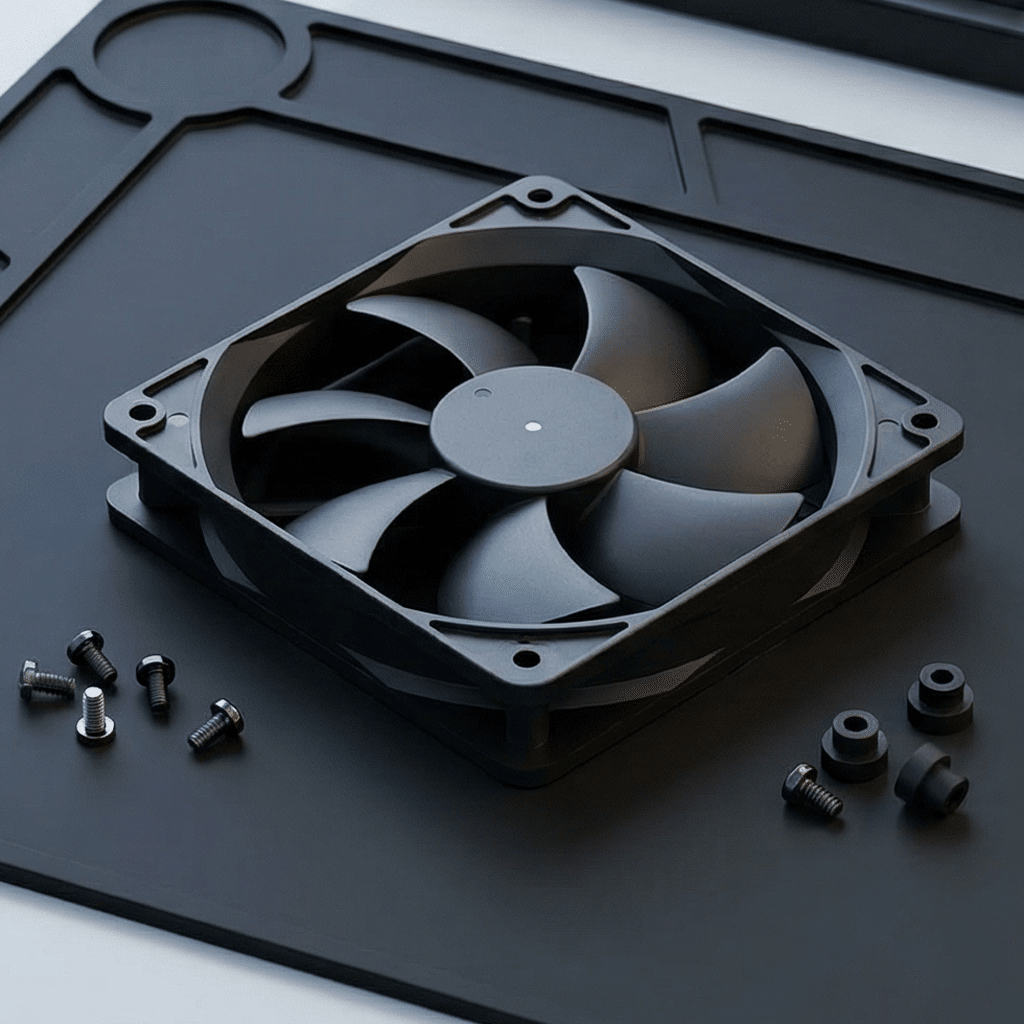
Axial fans operate like a propeller: their blades rotate around a central shaft, and air flows parallel to the axis of rotation (hence the name “axial”). Think of the fan in a household air conditioner or a desktop cooling fan—these are small-scale axial fans.
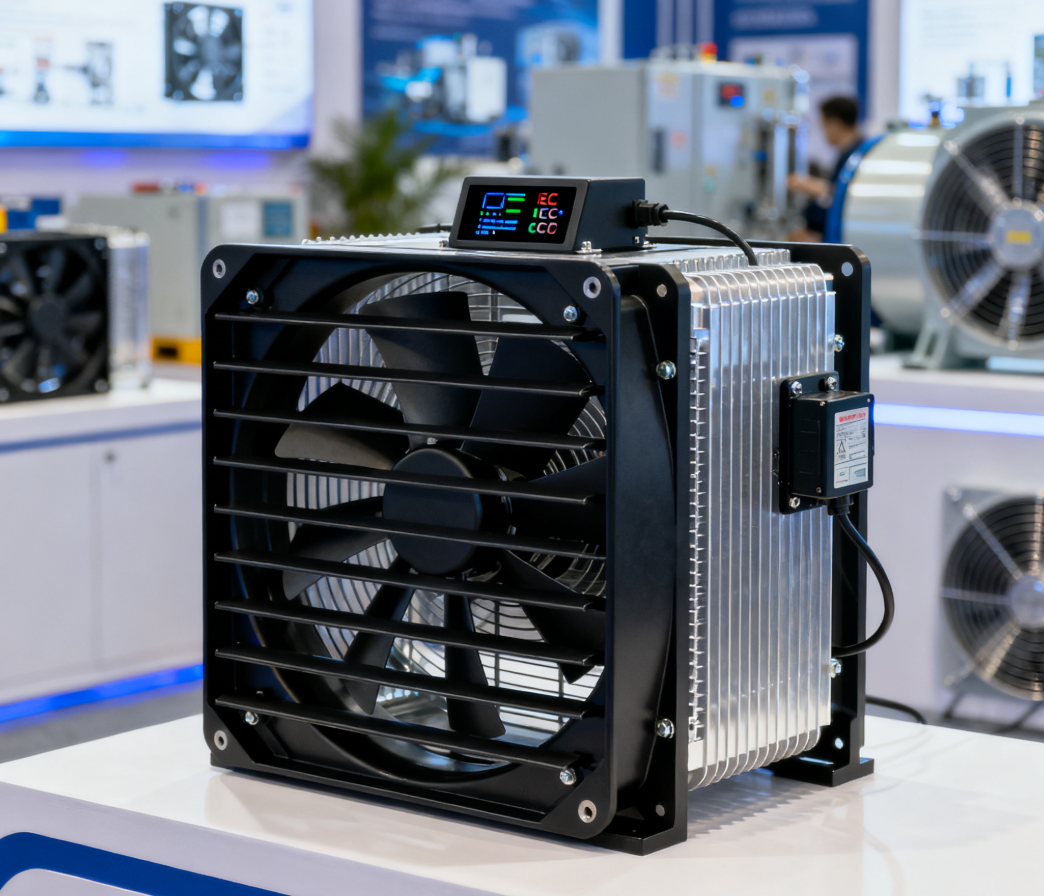
In larger applications, such as industrial fan systems, axial fans use wider, sturdier blades to push or pull large volumes of air through a space. For example, in a manufacturing plant, an axial industrial fan might be mounted on a wall or ceiling to draw hot air out of the facility, creating a steady, unobstructed airflow path. The simplicity of their design means axial fans are often more compact and easier to install, making them a go-to for scenarios where direct, linear airflow is needed.
1.2 Centrifugal Fans: Air Moves Perpendicular to the Shaft
Centrifugal fans (also called “radial fans”) work on a different principle: air enters the fan at the center, is accelerated by rotating blades, and is then pushed perpendicular to the shaft (radially outward) into a scroll-shaped housing (called a “volute”). This housing helps direct and pressurize the airflow before it exits the fan.
Centrifugal fans excel at moving air against resistance—such as through ductwork, filters, or tight industrial spaces. For instance, in a warehouse with a complex ventilation system that requires air to be distributed to multiple zones via ducts, a centrifugal industrial fan would be ideal. Its ability to generate higher static pressure (the force needed to overcome airflow resistance) makes it suitable for applications where air can’t flow freely in a straight line.
2. Performance Characteristics: Airflow, Pressure, and Efficiency
Beyond how they move air, axial and centrifugal fans differ sharply in three key performance metrics: airflow rate, static pressure, and energy efficiency. These metrics are especially critical for industrial fan applications, where suboptimal performance can impact productivity, safety, and operational costs.
2.1 Airflow Rate (CFM): Volume of Air Moved
- Axial Fans: Designed to deliver high airflow rates (measured in cubic feet per minute, CFM) at low static pressure. A large axial industrial fan from Shenzhen Xinqifeng, for example, can generate 10,000–60,000 CFM, making it perfect for open industrial spaces like factories or workshops where the goal is to circulate large volumes of air quickly.
- Centrifugal Fans: Typically offer lower airflow rates than axial fans but excel at maintaining consistent airflow even when resistance is high. A centrifugal industrial fan might produce 5,000–30,000 CFM, but its strength lies in pushing that air through ducts, filters, or heat exchangers—common in industrial settings like chemical plants or food processing facilities, where air must be treated or directed precisely.
2.2 Static Pressure: Overcoming Airflow Resistance
- Axial Fans: Have low static pressure capabilities. This means they struggle to move air through obstacles like ductwork, thick filters, or enclosed spaces. If you try to use an axial fan in a ducted system, airflow will drop dramatically, reducing efficiency.
- Centrifugal Fans: Are built for high static pressure. The volute housing and blade design allow them to pressurize air, making them ideal for applications where air must travel through long duct runs, multiple bends, or equipment that creates resistance. For example, a centrifugal industrial fan from www.szxqffan.com might be used in a metalworking shop to extract fumes through a network of ducts—its high static pressure ensures fumes are pulled away effectively, even through narrow pipes.
2.3 Energy Efficiency: Balancing Performance and Cost
- Axial Fans: Tend to be more energy-efficient when operating at low static pressure. Since their design is simple and they don’t need to work as hard to move air in a straight line, they use less power for the same airflow rate compared to centrifugal fans in similar low-resistance scenarios.
- Centrifugal Fans: Are more efficient at high static pressure. While they may use more power than axial fans at low resistance, their ability to maintain airflow against obstacles means they waste less energy in duct-heavy or high-resistance industrial systems. Shenzhen Xinqifeng’s centrifugal industrial fan models, for instance, feature optimized blade designs and variable-speed motors to further enhance efficiency, helping businesses reduce long-term energy costs.
3. Ideal Applications: Which Fan Fits Your Needs?
The choice between axial and centrifugal fans ultimately depends on your specific application—especially for industrial fan use cases, where the wrong choice can lead to poor performance or increased maintenance costs. Below are the most common scenarios for each type, with insights into how Shenzhen Xinqifeng can support your needs.
3.1 When to Choose an Axial Fan
Axial fans are best for applications that require high, unobstructed airflow at low pressure. Common industrial and commercial uses include:
- Industrial Ventilation: Wall-mounted or ceiling-mounted axial industrial fan units in factories, warehouses, or workshops to remove hot air, fumes, or moisture. For example, a textile mill might use axial fans to cool weaving machines and prevent fabric from absorbing excess humidity.
- HVAC Systems: Axial fans in large air handlers for commercial buildings (e.g., malls, offices) to circulate cooled or heated air in open spaces.
- Agricultural Settings: Axial fans in barns or greenhouses to ventilate livestock areas or regulate temperature for crops.
4. Key Considerations for Industrial Fan Selection
- Airflow Requirements: Calculate the CFM needed to ventilate your space—axial fans for high CFM, centrifugal for lower CFM with high pressure.
- Static Pressure Needs: Assess if air must move through ducts, filters, or obstacles (high resistance = centrifugal fan; low resistance = axial fan).
- Space Constraints: Axial fans are more compact and work well in open areas; centrifugal fans require space for their volute housing and duct connections.
- Durability: For harsh industrial environments (e.g., dust, moisture, high temperatures), choose a industrial fan with corrosion-resistant materials and reinforced blades—like those offered by Shenzhen Xinqifeng.
Final Thoughts: Partner with Shenzhen Xinqifeng for Your Industrial Fan Needs
What is a Blower Used for --Key Applications Across Industries
What is the Difference Between Industrial Fan and Commercial Fan
Related Article