
How to Select the Ideal Cooling Fan for Specific Applications
author: Rainie
2025-05-30
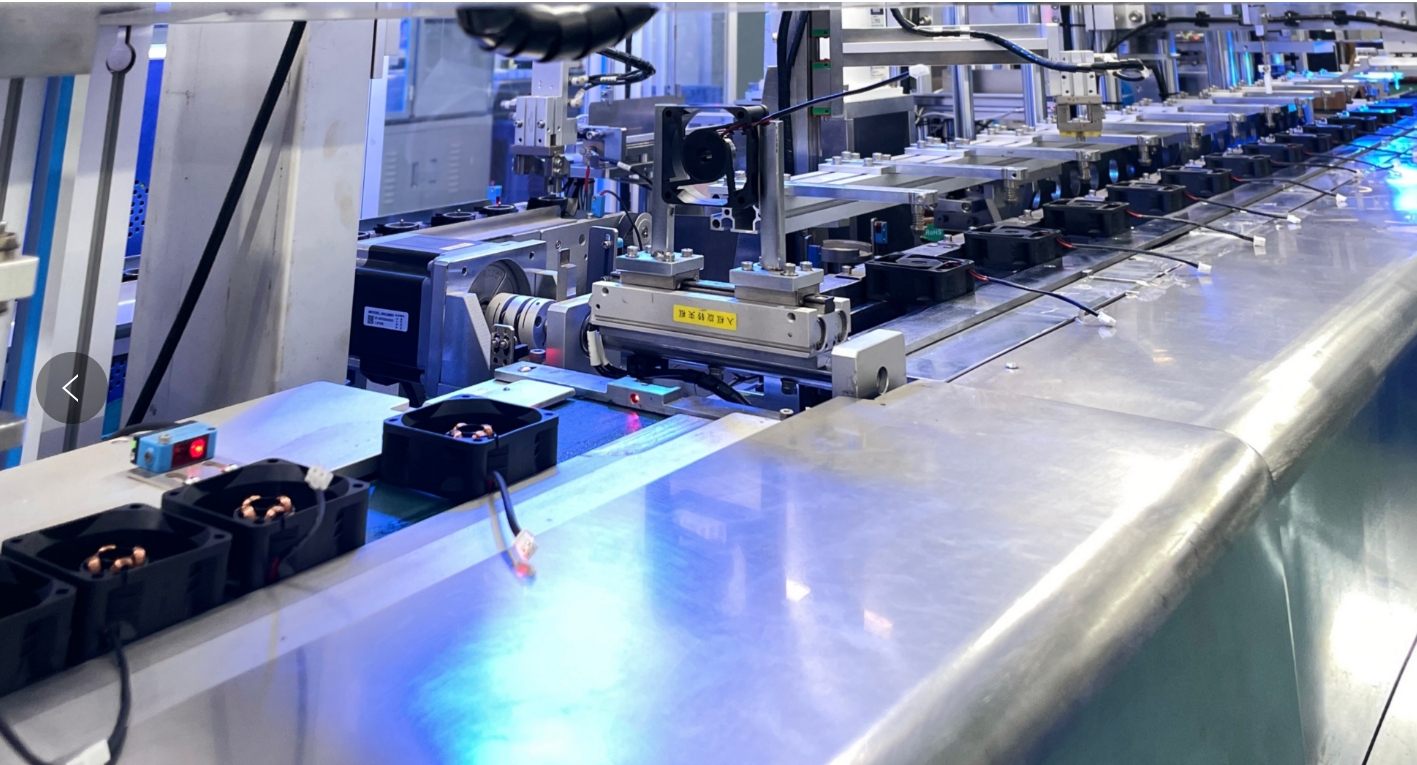
In the construction of cooling systems, choosing a suitable cooling fan is like equipping devices with “exclusive guardians.” This article will provide a scientific selection guide from four dimensions: core parameters, application scenarios, environmental factors, and other key points, helping you find the optimal balance among performance, cost, and reliability.
Core Parameters - Anchoring the Benchmark for Performance Adaptation
The performance parameters of cooling fans are the core basis for selection. Only by precisely matching these parameters can the efficient heat dissipation of devices be ensured.
1.1 Airflow: The Direct Yardstick of Heat Dissipation Efficiency
- Definition: Airflow refers to the volume of air delivered by the fan per unit of time, commonly measured in CFM (cubic feet per minute) or m³/h.
- Performance Correlation: Airflow is positively correlated with heat dissipation efficiency. A larger airflow means more heat can be carried away per unit of time.
- Scenario Adaptation:
-
- High - heat - generating devices: For data center servers, high - performance gaming graphics cards, etc., large - airflow fans with 100+ CFM should be selected to ensure rapid heat dissipation.
-
- Low - power devices: For smart bracelets, small routers, etc., low - airflow fans with 20 - 50 CFM can meet the heat dissipation requirements while reducing operating noise.
1.2 Static Pressure: The Key Indicator for Penetrating Resistance
- Definition: Static pressure represents the fan's ability to overcome airflow resistance, measured in mm H₂O or Pa.
- Performance Correlation: High - static - pressure fans are adept at pushing air through dense heat sinks or narrow air ducts, while low - static - pressure fans are suitable for open environments.
- Scenario Adaptation:
-
- High - resistance scenarios: For CPU coolers, air conditioner condensing systems, etc., high - pressure fans with 3 - 5 mm H₂O should be preferred to ensure effective airflow penetration through the heat dissipation structure.
-
- Low - resistance scenarios: For ordinary chassis heat dissipation and ventilation, low - static - pressure fans with 0.5 - 1 mm H₂O are sufficient, which are economical and practical.
1.3 Speed: The Core Element of Dynamic Adjustment
- Definition: Speed refers to the number of revolutions per minute (RPM) of the fan, usually positively correlated with airflow and noise.
- Adjustment Technology:
-
- Fixed - speed fans: Suitable for scenarios with stable ambient temperatures, such as ordinary office computers, with low costs but limited flexibility.
-
- PWM temperature - controlled fans: Automatically adjust the speed through temperature sensors. In high - load scenarios like gaming consoles and data centers, they can ensure heat dissipation while reducing noise.
- Lifespan Consideration: High speeds will accelerate fan wear, so selection should be combined with the device's operating duration to avoid frequent replacements.
1.4 Noise: An Important Indicator of User Experience
- Definition: Measured in decibels (dBA), usually indicating the maximum noise value of the fan at full speed.
- Scenario Adaptation:
-
- Quiet - demand scenarios: For medical equipment, home theaters, etc., large - size, low - speed fans with noise ≤25 dBA should be preferred to create a quiet environment.
-
- Industrial application scenarios: In server rooms, factory workshops, etc., a noise level of 30 - 50 dBA can be tolerated to ensure efficient heat dissipation as the top priority.
1.5 Size: Balancing Space and Performance
- Specification Classification:
-
- Consumer - grade: Common sizes include 80mm, 120mm, 140mm, widely used in computer chassis, household devices.
-
- Industrial - grade: Large - size fans over 200mm are suitable for cabinet heat dissipation, large - scale ventilation systems.
- Selection Principle: At the same rotation speed, larger - size fans can achieve higher airflow and lower noise, but sufficient installation space must be ensured.
Application Scenarios - Matching Fan Types According to Demand
Different application scenarios have differentiated requirements for fan structures and functions. Only by precise selection can the best performance be achieved.
2.1 Axial Fan: The Mainstay of Open - Type Heat Dissipation
- Working Principle: The airflow direction is parallel to the fan axis, featuring a simple structure and low manufacturing cost.
- Application Scenarios:
-
- Typical applications: Rear fans of computer chassis, power supply heat dissipation, outdoor units of air conditioners, quickly exhausting internal heat of devices.
-
- Environmental adaptation: Rapid air exchange in low - resistance environments, such as cabinet ventilation, greenhouse cooling.
2.2 Centrifugal Fan: The Expert in Narrow - Space Heat Dissipation
- Working Principle: Air is sucked in axially and discharged radially, characterized by high static pressure and medium airflow.
- Application Scenarios:
-
- Space - limited scenarios: Heat dissipation modules of laptops, internal air ducts of projectors, achieving efficient heat dissipation in narrow spaces.
-
- Directional air - supply requirements: Air purifiers, small - scale ventilation systems, precisely controlling the airflow direction.
2.3 Blower Fan: The Professional Choice for High - Pressure Environments
- Technical Features: As a special form of centrifugal fans, it has extremely high static pressure and highly concentrated airflow.
- Application Scenarios:
-
- Industrial - grade applications: Industrial dust removal equipment, vacuum systems, gas transmission pipelines, meeting high - pressure requirements.
-
- Precision equipment heat dissipation: GPU turbine coolers, forcing airflow through the complex internal air ducts of graphics cards to prevent heat accumulation.
2.4 Mixed Flow Fan: The All - Around Player with Balanced Performance
- Technical Advantages: Combining the characteristics of axial and centrifugal fans, it has moderate airflow and static pressure, with high operating efficiency.
- Application Scenarios: Suitable for scenarios with balanced requirements for airflow and static pressure, such as heat dissipation of some servers, industrial ventilation systems.
Environmental Factors - Ensuring Long - Term Stable Operation of Fans
The working environment directly affects the service life and performance of fans. Environmental characteristics need to be fully considered during the selection process.
3.1 Temperature: Special Challenges in Extreme Environments
- High - temperature scenarios: Near industrial ovens, metallurgical equipment, etc., special fans with a temperature resistance of ≥60℃ should be selected. Adopt high - temperature - resistant materials such as metal frames and silicone seals to ensure stable operation.
- Low - temperature scenarios: For cold storage, outdoor low - temperature devices, fans with ceramic bearings or wide - temperature lubricants should be configured to avoid failures caused by lubricant solidification.
3.2 Dust/Humidity: Key Tests of Protection Performance
- Dusty environments: In factory workshops, mines, etc., fans with fully enclosed designs or high - efficiency dust filters should be preferred to prevent dust from entering the bearings and causing jams.
- High - humidity environments: In coastal areas, damp basements, etc., waterproof fans with an IP65 or above protection rating should be used to eliminate the risks of short circuits and metal corrosion.
3.3 Vibration and Impact: Necessary Considerations for Industrial Applications
- Industrial - grade equipment: For construction machinery, vehicle - mounted systems, vibration - resistant fans with reinforced metal frames and double - ball bearings should be selected to withstand the risk of component loosening caused by long - term vibration.
Other Key Points - Details Determine the Selection Quality
In addition to core parameters and environmental adaptation, there are many other factors that affect the actual use effect of fans.
4.1 Bearing Types: The Balance Point between Lifespan and Noise
- Sleeve Bearing: Quiet operation, low cost, but with a relatively short lifespan (about 20,000 hours), suitable for low - frequency use scenarios such as home and office.
- Ball Bearing: With a lifespan of over 50,000 hours and strong vibration resistance, although with slightly higher noise, it is suitable for industrial equipment and high - frequency use scenarios.
- Magnetic Bearing: Excellent mute effect, extremely low wear, the longest lifespan, but with high costs, commonly used in high - end precision instruments.
4.2 Power Supply Types: Adapt to Device Power Requirements
- DC Fans: The first choice for mainstream electronic devices, supporting 12V/24V power supply, with PWM speed regulation function, precisely matching the heat dissipation requirements of devices.
- AC Fans: Suitable for industrial ventilation and other scenarios, directly connected to 110V/220V mains power without the need for power conversion, but with relatively limited speed regulation functions.
4.3 Installation Methods: Dual Requirements for Convenience and Stability
- Screw - fixing: Suitable for fixed scenarios such as chassis and cabinets, providing a stable installation effect.
- Snap - on/Magnetic: Easy for quick disassembly and assembly, commonly used in portable devices such as laptop cooling bases.
- Embedded installation: Suitable for integrated devices such as projectors and game consoles, requiring precise installation holes to be reserved in advance.
Summary of the Selection Process - A Systematic Decision - Making Path
- Requirement Sorting: Clearly define heat dissipation goals (such as temperature rise control range), installation space size, and budget constraints.
- Parameter Calculation: Based on the device's thermal design power (TDP), calculate the basic airflow requirement through the formula Airflow = TDP × 860 ÷ (Air Density × Specific Heat Capacity × Temperature Rise).
- Initial Type Selection: Select axial/centrifugal/blower fans according to the air duct structure, and determine the protection level according to environmental conditions.
- Actual Test Verification: Prioritize testing the noise and temperature control effects of fans under actual working conditions to ensure long - term stable operation.
Through the above systematic selection strategy, you will be able to precisely match cooling fans for different application scenarios, achieving the dual goals of efficient heat dissipation and reliable operation of devices.
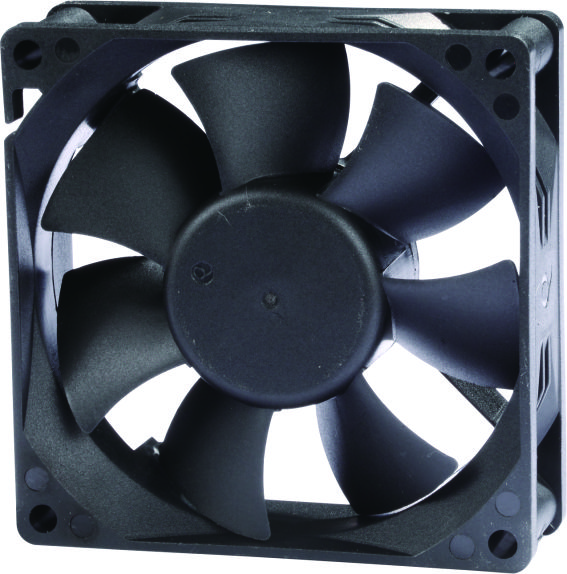
The Heart of Cooling Fans - A Comprehensive Guide to Bearing Types - How to Choose Among Sleeve-Ball-Hydraulic and Ceramic Bearings
Axial Fan Blower Fan and How to Distinguish AC and DC Cooling Fans
Related Article
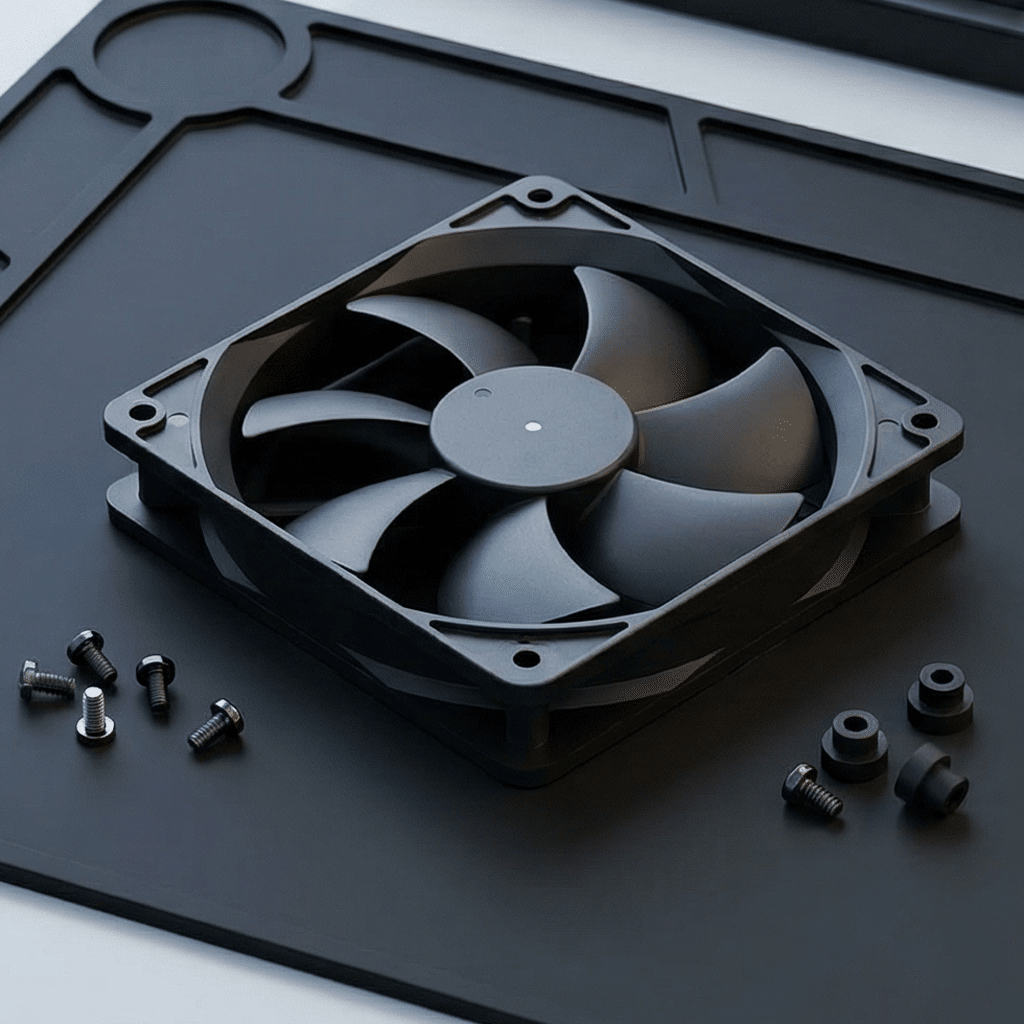
hoose a cooling fan at the operating point where its published performance curve meets the resistance of the finished equipment—not at the fan’s maximum free-air CFM.
How Do You Choose a Cooling Fan by Static Pressure and Airflow

Set cooling fan airflow so cool supply air reaches the highest-heat components first and hot air exits without returning to the intake. Verify the airflow arrow molded on the fan frame, not the visible blade shape.
How Do You Set Cooling Fan Airflow Direction in Electronic Equipment?

An axial fan is usually better for moving a large volume of air through a low-resistance enclosure, while a centrifugal blower is usually better when air must pass through dense heat sinks, filters, narrow ducts or other high-resistance components.
Axial Fan vs Centrifugal Blower- Which Is Better for Electronics Cooling