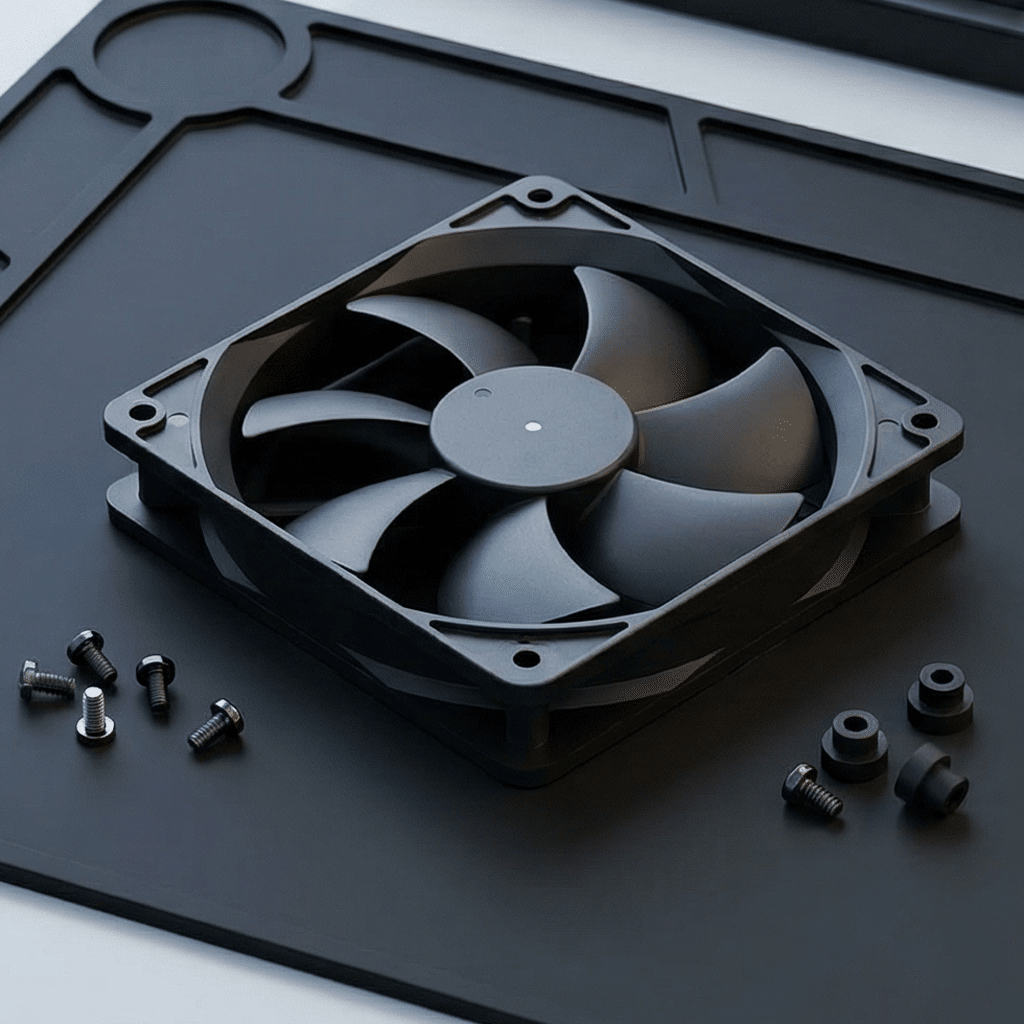
Fan Industry Raw Material Cost Index Released
Fan Industry Raw Material Cost Index Released
Copper price volatility emerges as biggest variable – tracking steel, rare earth magnets, plastics, and their impact on fan production costs.
1. Introducing the Fan Industry Raw Material Cost Index
The newly launched Fan Industry Raw Material Cost Index (FIMCI) provides a monthly benchmark for the key raw materials that make up a typical electric fan. Developed in collaboration with industry associations and commodity analysts, the index tracks price movements across copper, steel, rare earth magnets, aluminum, and engineering plastics – weighted by their respective shares in fan bill of materials (BOM).
Baseline: 100 (January 2025) | Current: April 2026
↑ +12.4% since January 2025
📊 Index Composition (Weighted Average)
Copper (winding wire): 35% | Steel (frames, housings): 25% | Rare earth magnets (BLDC): 15% | Aluminum (blades, housings): 10% | Engineering plastics: 10% | Electronics/other: 5%
2. Copper: The #1 Variable Affecting Fan Costs
Copper represents the single largest raw material cost in fan manufacturing – accounting for up to 35% of BOM for motors and winding wire. The past 12 months have seen unprecedented volatility.
| Period | Copper Price (USD/tonne) | Change | Impact on Fan Cost |
|---|---|---|---|
| April 2025 | $8,450 | — | Baseline |
| October 2025 | $9,820 | +16% | +5-6% fan cost increase |
| January 2026 | $10,150 | +20% | +7% fan cost increase |
| April 2026 | $10,280 | +22% | +7.5% fan cost increase |
⚠️ Copper Volatility Alert
Over the last 12 months, copper prices have fluctuated within a range of ±18% – the highest volatility since 2022. Key drivers: supply constraints from Chilean and Peruvian mines, energy transition demand (EVs, renewable energy), and speculative trading. For fan manufacturers, copper now represents the single biggest cost uncertainty.
📈 Forecast (Q2-Q3 2026)
Analysts project copper to trade between $9,800-$11,000/tonne through mid-2026. Fan prices are expected to adjust accordingly – buyers should consider forward contracting or building safety stock to mitigate volatility.
3. Steel & Aluminum: Steady but Regional Variations
Steel (used for fan frames, motor housings, and mounting brackets) and aluminum (blades, lightweight housings) have shown relative stability compared to copper.
Hot-Rolled Steel (HRC)
Current: $620/tonne
YoY: -3%
Stable supply, slight softening due to lower construction demand.
Aluminum (LME)
Current: $2,480/tonne
YoY: +2%
Moderate increase driven by energy costs, but within normal range.
📊 Steel & Aluminum Trends
Unlike copper, steel and aluminum supply chains have normalized post-pandemic. However, regional trade policies (US Section 232, EU CBAM) may create price divergence between markets. Chinese domestic prices remain competitive due to ample capacity.
4. Rare Earth Magnets: BLDC Motor Cost Driver
With the shift toward BLDC/EC fans, neodymium (NdFeB) magnets have become an increasingly important cost component – representing up to 15% of BOM for high-efficiency fan motors.
| Magnet Grade | Price (USD/kg) | YoY Change | Impact |
|---|---|---|---|
| N35 (standard BLDC) | $52/kg | +8% | Moderate cost pressure |
| N42 (high-efficiency)<\/td> | $78/kg | +12% | Higher for premium EC fans |
| N52 (top tier)<\/td> | $115/kg | +15% | Significant for ultra-high efficiency |
🧲 Rare Earth Outlook
China maintains dominant control over rare earth refining (>85% global supply). Export restrictions and environmental regulations have created upward price pressure. However, grain-boundary diffusion (GBD) technology has reduced magnet material usage by 20-30% in advanced BLDC fans – partially offsetting cost increases.
5. Plastics & Electronic Components
Engineering plastics (PBT, PA66, PC) and electronic components (PCB, driver ICs, sensors) round out the fan BOM.
Engineering Plastics
PBT/PA66 prices: -5% YoY due to lower oil prices. Stable supply outlook.
Electronic Components
Driver ICs and MOSFETs: prices stabilized after 2023 shortages. Lead times back to normal (4-6 weeks).
📊 Summary Component Trend
✓ Copper: HIGH volatility – primary cost risk
✓ Steel/Aluminum: MODERATE – stable prices
✓ Rare earths: RISING – driven by BLDC adoption
✓ Plastics: STABLE – benefiting from lower oil
✓ Electronics: NORMALIZED – post-shortage recovery
6. What This Means for Fan Buyers
📅 Plan Ahead for Copper Volatility
With copper swinging ±18% in 12 months, fan prices may adjust quarterly. Consider longer-term contracts or safety stock to lock in prices.
💰 Compare Quotes Regularly
Raw material fluctuations create pricing disparities between suppliers. Active sourcing can capture cost advantages.
🔍 Understand BOM Composition
Copper-heavy fans (large motors, high-power AC fans) are most exposed to price swings. EC/BLDC fans have different cost structures.
📈 Use Index for Price Negotiation
Reference the FIMCI when discussing price adjustments with suppliers – ensures transparency and fairness.
💡 Buyer's Action Plan
✓ Monitor copper prices weekly – they directly affect your fan costs.
✓ Request cost breakdowns from suppliers to understand exposure.
✓ Lock in prices for 3-6 months where possible during stable periods.
✓ Consider EC fans – they use less copper per unit of airflow (higher efficiency, smaller motor).
✓ Contact us for real-time pricing and cost forecasts.
📊 Looking to Source Fans??
Follow us, and our team will provide procurement recommendations tailored to your fan orders.
❓ FAQs on Fan Raw Material Costs
Q: How much does copper affect final fan price?
A: Copper typically represents 35% of motor cost and 15-20% of total fan BOM. A 10% copper price increase raises fan costs by approximately 1.5-2%.
Q: Are EC/BLDC fans less affected by copper prices?
A: Yes. EC/BLDC fans use less copper per unit of airflow (higher efficiency means smaller motors). However, they use more rare earth magnets, which have their own cost dynamics.
Q: Will fan prices go up in 2026?
A: Moderate increases are likely if copper remains above $10,000/tonne. However, competition and efficiency improvements may partially offset raw material inflation.
BBQ & GRILL VENTILATION | 2026 BBQ Blowers Replace Traditional Axial Fans in Grilling Applications
General Administration of Customs Adds New Fan Export Codes for More Precise Category Regulation
Related Article