
Data Center High-Density Rack Cooling-From Fan Layout to PUE Optimization
author: Rainie
2025-07-28
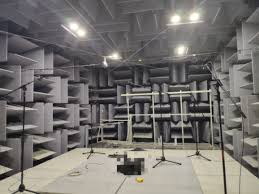
Data Center High-Density Rack Cooling: From Fan Layout to PUE Optimization
1. Challenges and Trends in High-Density Rack Cooling
With the explosive growth in AI computing demands, data center rack power densities have jumped from traditional 3-5kW to over 20kW, with some AI training clusters reaching 50kW+. This high-density deployment creates three critical bottlenecks for traditional air cooling:
- Fan energy consumption accounts for 15-20% of total IT energy use
- PUE is difficult to be lower than 1.3
- Noise exceeds 85dB(A)
According to ASHRAE TC 9.9 2025 technical guidelines, data center inlet temperatures can be increased to 35°C, creating new opportunities for fan system optimization. Inspur's 42kW intelligent air-cooled computing pod achieves a PUE of 1.18, demonstrating 25% energy savings compared to traditional designs through optimized fan layout.
2. Systematic Optimization Strategies for Fan Layout
2.1 Hot/Cold Aisle Containment and Fan Array Design
Airflow Organization Optimization: Implementing fully enclosed hot/cold aisles increases cold air utilization from 60% in traditional open layouts to over 95%. Case studies show this reduces air conditioning load by 30% and fan system power consumption by 22%.
Fan Wall Configuration:
- Airflow Calculation: Using the heat balance formula Q=0.05H/ΔT (Q: airflow in CFM, H: total heat in W, ΔT: allowable temperature rise in °C)
- For a 20kW rack (ΔT=15°C): Required airflow = 0.05×20000/15 = 66.7 CFM
- With 1.2x redundancy: 80 CFM actual requirement
- Static Pressure Matching: High-density server areas create 80Pa resistance, requiring fans with ≥100Pa pressure (e.g., Dongxingyue 14038 model delivering 120Pa at 4600RPM)
- Quantity Configuration: 42U racks should deploy 4-6×120mm fans or 3-4×140mm fans in a "2 front/3 rear" redundant layout
2.2 Innovative Fan Layout Technologies
Waveguide Mesh Structure: Inspur's hexagonal honeycomb waveguide mesh (0.2mm thickness, 11g weight) reduces turbulence by 40% and improves cooling efficiency by 17-22%. In M6 server tests, this design increased HDD IOPS by 8-10% while reducing fan power consumption by 40%.
Phase Difference Control: Dell Precision workstations employ asynchronous fan speed strategies by staggering rotational phases (0°/90°/180°/270°), reducing resonance noise from 52dB(A) to 45dB(A) with only 2% airflow loss.
Elastic Vibration Damping: Taicang Huaying Electronics integrates rubber-metal composite damping layers in fan frames, reducing vibration transmission by 40% and extending bearing life to 70,000 hours (compared to 40,000 hours in traditional designs).
2.3 Comparative Analysis of Layout Schemes
| Layout Type | Application Scenario | Typical PUE | Deployment Cost | Maintenance Difficulty |
|---|---|---|---|---|
| Front-to-back (horizontal) | Standard server racks | 1.2-1.3 | ★★★★☆ | ★★☆☆☆ |
| Bottom-to-top (vertical) | High-density blade servers | 1.15-1.25 | ★★★☆☆ | ★★★☆☆ |
| Side-to-side (lateral) | Telecom rooms | 1.25-1.4 | ★★★★☆ | ★★★☆☆ |
| Air-liquid hybrid | >40kW ultra-dense racks | 1.05-1.15 | ★☆☆☆☆ | ★★★★☆ |
3. Dynamic Speed Regulation and Intelligent Control Technologies
3.1 PWM Speed Regulation and Temperature Sensor Networks
Zoned Temperature Control: Dividing racks into 6-8 independent zones with NTC temperature sensors (1Hz sampling rate) enables fan-level precision control. A financial data center implementation reduced average fan speed by 25% while maintaining hotspot temperatures below 75°C.
Optimized Control Logic:
- Low temperature (<30°C): 50% speed (energy-saving mode)
- Medium temperature (30-40°C): 75% speed (balanced mode)
- High temperature (>40°C): 100% speed (enhanced mode)
- Transient load: 120% overboost (≤3 minutes duration)
3.2 AI-Driven Collaborative Optimization
GLP Data Center's "LingShang" AI control system predicts fan speeds based on real-time GPU loads, achieving refrigeration system coordination. Operational data shows this reduced PUE from 1.28 to 1.08 and cut fan system response time from 30 seconds to 5 seconds.
Huawei Cloud's CFD simulation + digital twin technology predicts thermal load changes 15 minutes in advance, avoiding frequent speed adjustments due to temperature fluctuations. This reduced unnecessary fan energy consumption by 28% in an AI cluster application.
4. Comprehensive PUE Optimization Practices
4.1 Energy Efficiency Improvement Measures for Fan Systems
Large-Size Fan Replacement: 140mm fans operate at 2000RPM lower than 92mm fans for the same airflow, reducing noise by 10dB(A) and power consumption by 30%. A hyperscale data center saved $450,000 annually by replacing all 92mm fans with 140mm models.
High-Efficiency Motor Applications: EC (Electronically Commutated) motors offer 25-30% higher efficiency than traditional AC motors, with up to 40% efficiency advantage at 50% load. Delta EC fans save 1200 kWh annually per 15kW rack.
Waste Heat Recovery: Exhaust air above 45°C can be recovered through heat exchangers for office heating or domestic hot water. Sugon's Chongqing data center achieves 85% heat recovery efficiency, meeting heating needs for 130,000㎡ of building space.
4.2 In-Depth Analysis of Benchmark Cases
Case 1: Inspur 42kW Intelligent Air-Cooled Computing Pod
- Technical Solution: Fully enclosed hot/cold aisles + in-row cooling with high-temperature water (18°C inlet) + AI intelligent management
- Key Metrics:
- Rack power density: 42kW (6x traditional air-cooled racks)
- PUE: 1.18 (compared to 1.5 for traditional solutions)
- Deployment cycle: 7 days (vs. 30 days traditionally)
- Innovation: "Intelligent computing center elastic energy-saving technology" dynamically adjusts fan speeds and chilled water flow for on-demand cooling distribution
Case 2: GLP Dongguan Xiegang Data Center
- Retrofit Measures:
- Deployed 16 ANet intelligent gateways collecting data from 500+ points
- Fan system coordinated with air conditioning, maintaining ±0.5°C temperature difference
- Implemented 18°C high-temperature water inlet, improving chiller COP by 12%
- Results:
- PUE reduced from 1.45 to 1.08
- Data center footprint reduced by 60%
- Annual carbon emissions reduction equivalent to planting 3 million trees
5. Future Trends and Best Practices
5.1 Air-Liquid Hybrid Cooling Transition
For medium-high density (20-40kW) scenarios, "cold plate liquid cooling + auxiliary fans" hybrid architecture provides optimal balance. An AI training center case achieved PUE 1.12 with 35% energy savings over air cooling and 40% lower cost than full liquid cooling by cooling 70% of heat with cold plates and 30% with fans.
5.2 Design Implementation Roadmap
-
Requirements Assessment:
- Determine current and 3-year planned rack power densities
- Calculate thermal load and airflow requirements using ASHRAE tools
- Evaluate room airflow resistance distribution with CFD simulation
-
Solution Design:
- Select appropriate layout type based on Table 2 comparison
- Fan selection focusing on airflow-pressure curves
- Control strategy design (zoned temperature control/AI optimization)
-
Validation and Optimization:
- Build 1:1 prototype testing (key 指标: temperature uniformity <5°C)
- Conduct wind tunnel testing to verify airflow organization
- Develop maintenance plan including fan replacement cycle and vibration monitoring
5.3 Operational Management Recommendations
- Regular Maintenance: Clean fan filters quarterly (dust reduces airflow by 30%) and replace bearing lubricant annually
- Condition Monitoring: Deploy vibration sensors (recommended ISO 10816 standard with alarm threshold >4.5mm/s)
- Continuous Optimization: Perform CFD simulation review semi-annually and adjust fan parameters based on IT equipment changes
Appendix: Fan Selection Calculation Tool
Airflow Quick Reference Table (based on Q=0.05H/ΔT, ΔT=15°C)
| Rack Power (kW) | Basic Airflow (CFM) | Redundant Airflow (CFM) | Recommended Fan Configuration |
|---|---|---|---|
| 10 | 33.3 | 40 | 2×120mm |
| 20 | 66.7 | 80 | 4×120mm or 3×140mm |
| 30 | 100 | 120 | 6×120mm or 4×140mm |
| 40 | 133.3 | 160 | 8×120mm or 5×140mm |
how to turn on pc fan shortcut cool
Troubleshooting Slow Cooling Fan Speed: From Capacitor Failures to Overheat Protection
Related Article
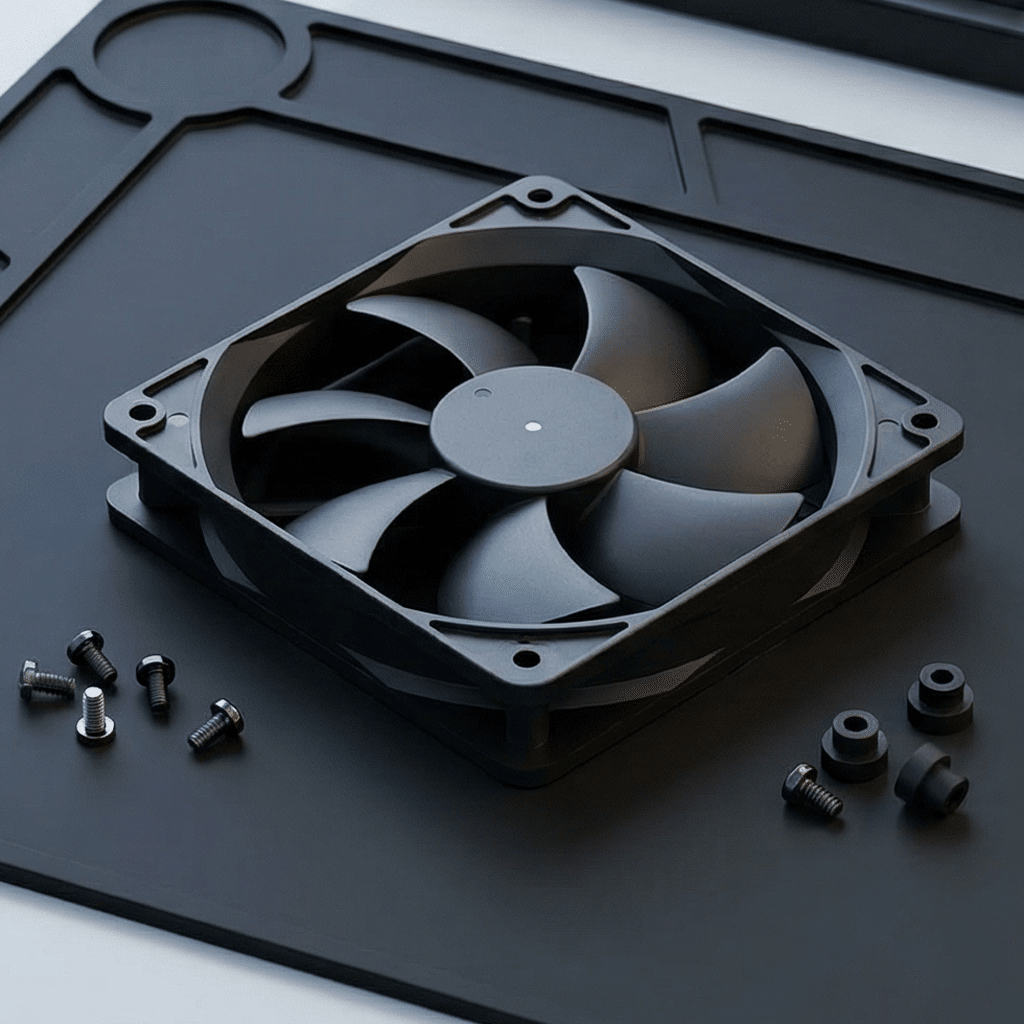
hoose a cooling fan at the operating point where its published performance curve meets the resistance of the finished equipment—not at the fan’s maximum free-air CFM.
How Do You Choose a Cooling Fan by Static Pressure and Airflow
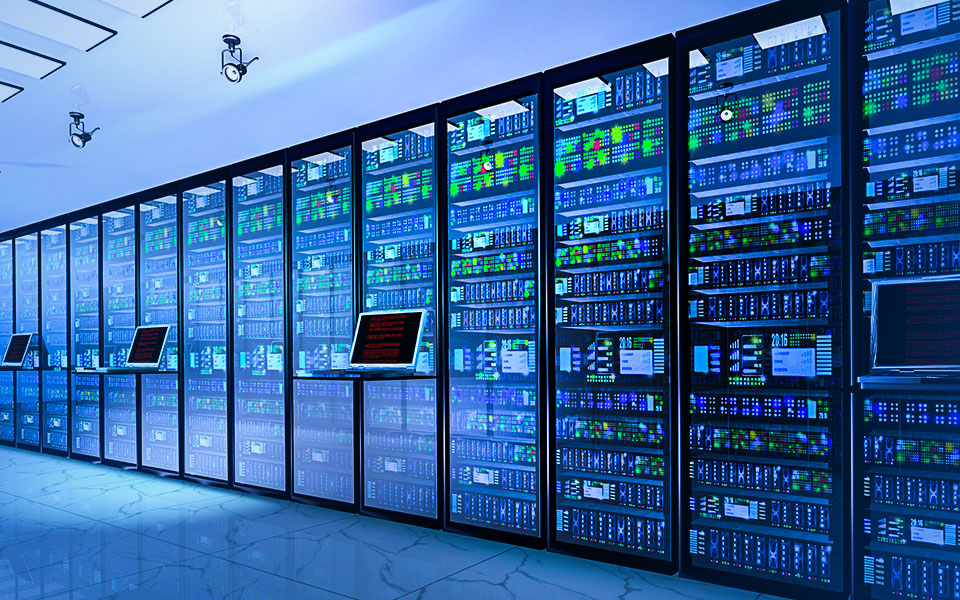
Set cooling fan airflow so cool supply air reaches the highest-heat components first and hot air exits without returning to the intake. Verify the airflow arrow molded on the fan frame, not the visible blade shape.
How Do You Set Cooling Fan Airflow Direction in Electronic Equipment?

An axial fan is usually better for moving a large volume of air through a low-resistance enclosure, while a centrifugal blower is usually better when air must pass through dense heat sinks, filters, narrow ducts or other high-resistance components.
Axial Fan vs Centrifugal Blower- Which Is Better for Electronics Cooling