
Axial Fan Blower Fan and How to Distinguish AC and DC Cooling Fans
author: Rainie
2025-05-27
In the world of ventilation and cooling systems, axial fans and blower fans play crucial roles, and understanding the difference between AC and DC cooling fans is essential for proper equipment selection and operation. This article will delve into what axial fans and blower fans are, and provide detailed methods on how to tell if a cooling fan is AC or DC.
1. What is Axial Fan?
1.1 Definition and Working Principle
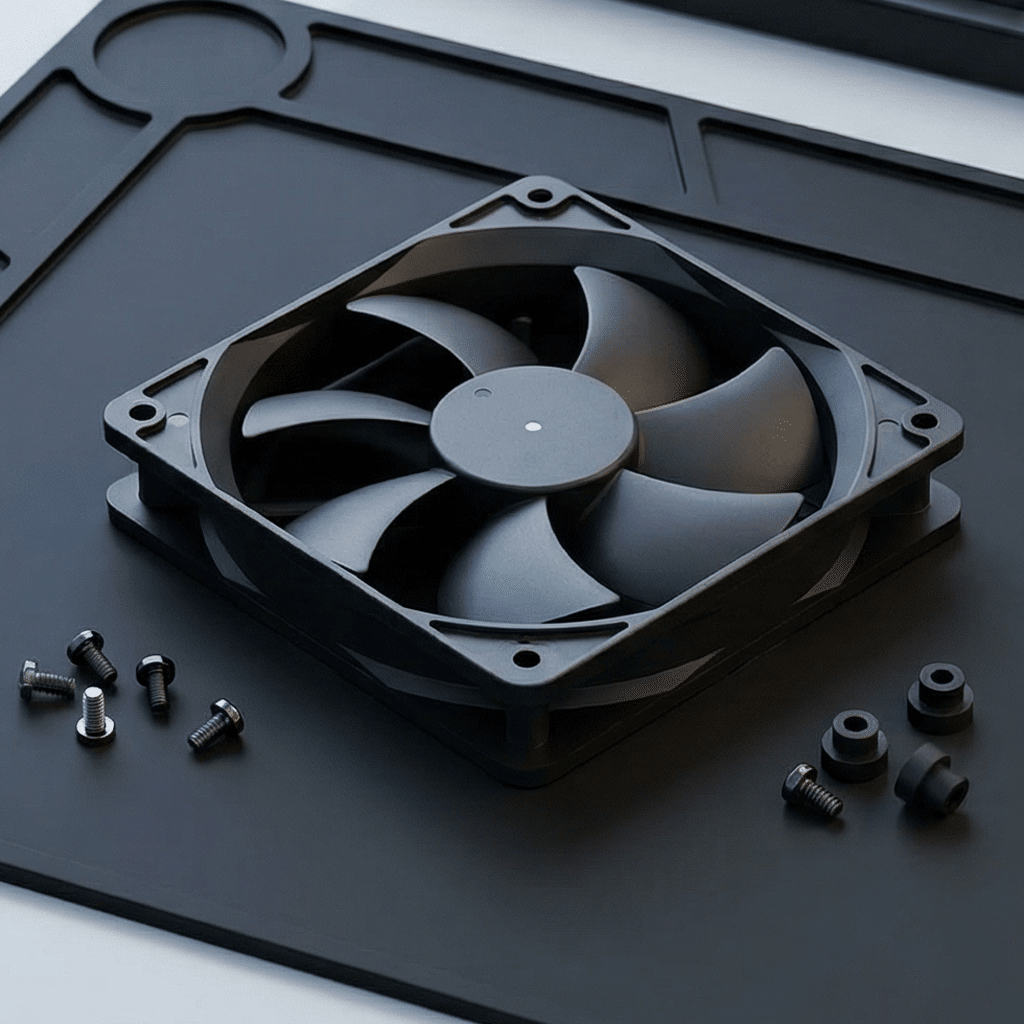
An axial fan is a type of fan where the airflow moves parallel to the axis of the fan's rotation. It consists of a hub with multiple fan blades attached. When the fan motor drives the hub to rotate, the curved shape of the blades pushes the air in the direction of the fan's axis. This working principle is similar to how a propeller on an aircraft or a boat moves fluid (air or water) in a parallel direction.
1.2 Key Features
- Simple Structure: Axial fans generally have a relatively straightforward design, which makes them easy to manufacture, install, and maintain.
- High Airflow Volume: They are capable of generating a large volume of airflow, making them suitable for applications where a significant amount of air needs to be moved quickly. However, the pressure they can generate is relatively low compared to some other types of fans.
- Low Noise: Many axial fans operate with relatively low noise levels, especially those designed for household or office use, which makes them ideal for environments where noise reduction is a priority.
1.3 Common Applications
- HVAC Systems: In heating, ventilation, and air - conditioning systems, axial fans are used to circulate air within buildings. They help distribute conditioned air evenly throughout rooms, ensuring a comfortable indoor environment.
- Computer Cooling: Inside computer cases, axial fans are commonly used to cool components such as the CPU, graphics card, and power supply. Their ability to move a large volume of air quickly helps dissipate the heat generated by these high - performance components.
- Industrial Ventilation: In factories and industrial facilities, axial fans are employed to remove fumes, dust, and excess heat, improving the working environment and ensuring the safety of workers.
2. What is Blower Fan?
2.1 Definition and Working Principle
A blower fan, also known as a centrifugal fan, operates on a different principle compared to an axial fan. It has an impeller with curved blades that rotate within a housing. As the impeller spins, air enters the fan axially and is then forced outward by the centrifugal force created by the rotation of the blades. The air is then directed through an outlet in the fan housing, generating both airflow and pressure.
2.2 Key Features
- High Pressure Generation: Blower fans are designed to produce high pressure, which allows them to move air against resistance, such as through long ducts or in applications where a strong airflow is required over a specific distance.
- Variable Airflow Characteristics: Depending on the design and size of the blower fan, they can offer a wide range of airflow rates, making them suitable for various applications.
- Compact Size: Many blower fans have a more compact footprint compared to axial fans of similar airflow and pressure capabilities, which makes them ideal for installations where space is limited.
2.3 Common Applications
- Air Purification Systems: Blower fans are often used in air purifiers to draw in large volumes of air, pass it through filters, and then force the clean air back into the room. The high pressure generated helps ensure efficient air circulation and filtration.
- Automotive Engines: In automotive engines, blower fans are used for cooling the radiator. They can push air through the radiator fins even when the vehicle is stationary or moving at low speeds, preventing the engine from overheating.
- Industrial Drying and Cooling Processes: In industrial settings, blower fans are used in drying ovens, cooling towers, and other processes where precise control of airflow and pressure is required to achieve the desired results.
3. How to Tell if Cooling Fan is AC or DC
3.1 Power Source and Electrical Connection
- AC Fans: AC (alternating current) cooling fans are powered by the standard household or industrial electrical supply, which alternates the direction of current flow. They usually have a simple two - or three - wire connection. The two - wire connection typically consists of a live wire and a neutral wire, while the three - wire connection may include an additional ground wire for safety. AC fans are often directly connected to the electrical outlet or a power distribution system without the need for additional power conversion components.
- DC Fans: DC (direct current) cooling fans, on the other hand, require a direct current power source. They are commonly powered by batteries, power adapters that convert AC to DC, or dedicated DC power supplies within electronic devices. DC fans usually have a multi - pin connector, with at least two pins for power (positive and negative) and sometimes additional pins for speed control signals, such as Pulse - Width Modulation (PWM) signals.
3.2 Speed Control and Operation Characteristics
- AC Fans: AC fans typically have a fixed speed or a limited number of speed settings. These speed adjustments are usually achieved through methods such as changing the voltage supplied to the fan motor using a transformer or a variable resistor. The speed control of AC fans is relatively simple and less precise compared to DC fans.
- DC Fans: DC fans offer more advanced and precise speed control options. Many DC fans support PWM control, which allows for smooth and continuous adjustment of the fan speed based on temperature or other control signals. This enables DC fans to operate at the optimal speed for different cooling requirements, reducing noise and energy consumption when less cooling is needed.
3.3 Physical Appearance and Markings
- AC Fans: AC fans often have a larger and more robust motor design due to the nature of alternating current operation. They may also have a visible capacitor attached to the motor, which is used to start the motor and improve its performance. Additionally, AC fans usually have labels or markings on the housing indicating the voltage rating (e.g., 110V - 220V), frequency (e.g., 50Hz - 60Hz), and power consumption (in watts).
- DC Fans: DC fans are generally smaller and more compact, especially those used in electronic devices. They may have a label indicating the voltage requirement (e.g., 12V, 24V) and current draw (in amperes). Some DC fans also have additional markings related to speed control features, such as the PWM frequency range or the presence of a tachometer output for monitoring the fan speed.
In conclusion, understanding the characteristics of axial fans and blower fans, as well as being able to distinguish between AC and DC cooling fans, is essential for choosing the right fan for specific applications. Whether it's for home, office, or industrial use, making an informed decision can lead to more efficient ventilation, better cooling performance, and longer - lasting equipment.
How to Select the Ideal Cooling Fan for Specific Applications
Ultimate Guide to Selecting the Right Cooling Fan: Eliminate Device Overheating and Ensure Optimal Performance
Related Article
hoose a cooling fan at the operating point where its published performance curve meets the resistance of the finished equipment—not at the fan’s maximum free-air CFM.
How Do You Choose a Cooling Fan by Static Pressure and Airflow

Set cooling fan airflow so cool supply air reaches the highest-heat components first and hot air exits without returning to the intake. Verify the airflow arrow molded on the fan frame, not the visible blade shape.
How Do You Set Cooling Fan Airflow Direction in Electronic Equipment?

An axial fan is usually better for moving a large volume of air through a low-resistance enclosure, while a centrifugal blower is usually better when air must pass through dense heat sinks, filters, narrow ducts or other high-resistance components.
Axial Fan vs Centrifugal Blower- Which Is Better for Electronics Cooling