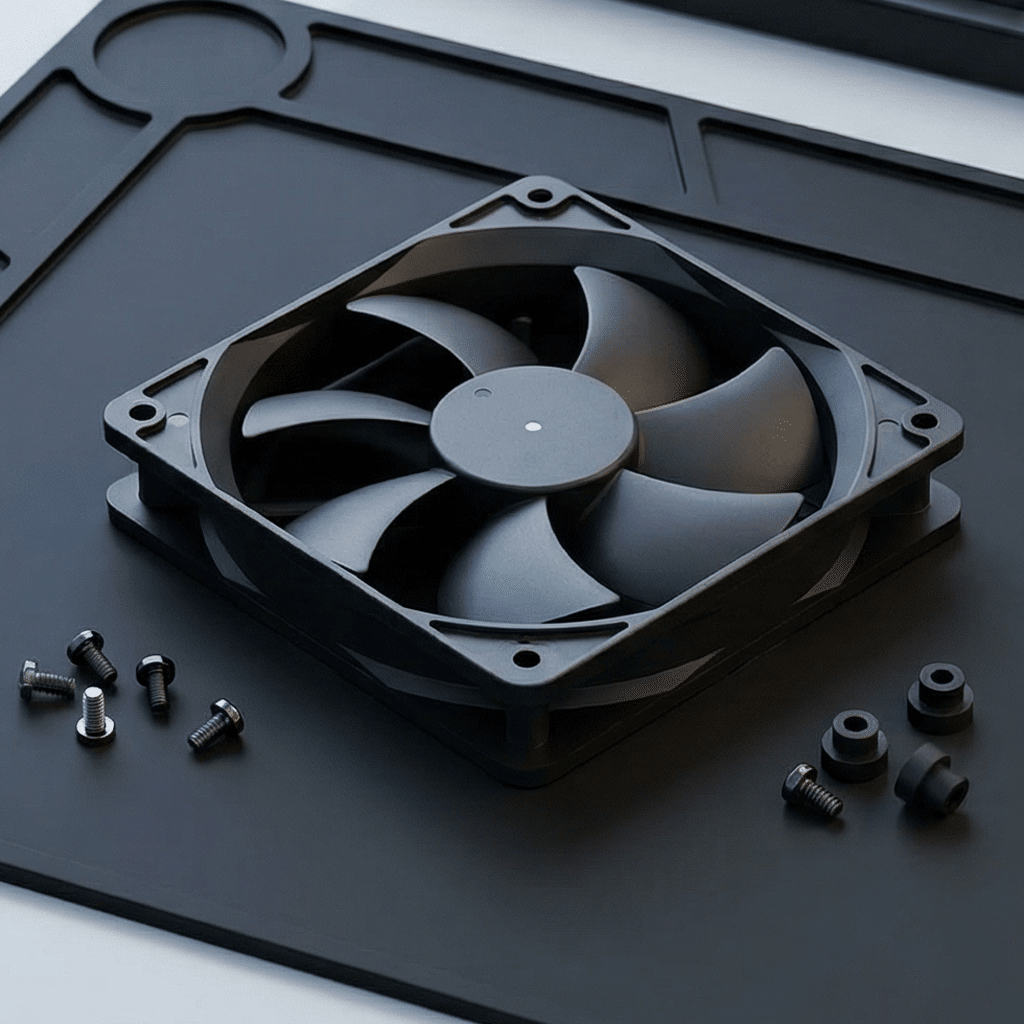
Copper vs. Steel: How 2026 Raw Material Prices Are Reshaping DC & AC Fan Cost Structures
Copper vs. Steel: How 2026 Raw Material Prices Are Reshaping DC & AC Fan Cost Structures
Table of Contents
- Introduction: The Material Divide
- 1. Copper: The AC Motor's Achilles' Heel
- 2. Rare Earth Magnets: The DC Fan's Strategic Vulnerability
- 3. Breaking Down the Cost Structures
- 4. 2026 Price Forecast & Scenarios
- 5. When to Lock: A Procurement Decision Matrix
- 6. Alternatives and Risk Mitigation
- Frequently Asked Questions (FAQ)
Publication Date: March 9, 2026 | Category: Cost Analysis & Procurement Strategy
Introduction: The Material Divide
In the fan manufacturing industry, the choice between AC and DC motors has always involved trade-offs in efficiency, noise, and initial cost. But in 2026, a new factor is dominating procurement decisions: raw material price volatility.
AC and DC fans rely on fundamentally different material mixes. AC motors are copper-intensive, with windings accounting for the majority of material cost. DC motors (BLDC) also use copper, but add another critical component: rare earth permanent magnets.
This report analyzes the 2026 pricing dynamics for both material streams and provides actionable guidance for buyers navigating this complex landscape.
1. Copper: The AC Motor's Achilles' Heel
1.1 Current Price Outlook
Copper markets are experiencing significant upward pressure in early 2026. Citi Research projects that copper prices could reach $14,000 per ton within the next three months, with the 2026 average forecast holding at $13,000 per ton.
Huatai Securities analysis confirms this bullish outlook, citing two fundamental drivers:
- Supply constraints: Global electrolytic copper supply growth is projected at only 2.4% (660,000 tons) in 2026
- Demand strength: Demand growth of 3.3% (930,000 tons) driven by green energy transition and manufacturing复苏
The result: global copper markets are shifting from surplus to deficit in 2026, creating sustained price support.
• Near-term (3 months): Up to $14,000/ton
• Full-year average: ~$13,000/ton
• Supply-demand: Deficit of ~270,000 tons expected
1.2 Impact on AC Motor Costs
For AC induction motors—the workhorses of traditional fans—copper windings represent the single largest variable cost component. Core materials (conductive, magnetic, and structural) account for 60-80% of total motor cost.
Within this, the choice between pure copper and alternatives creates significant cost variation:
- Pure copper windings: Higher conductivity, lower heat generation, longer life, but full exposure to copper price volatility
- Aluminum or copper-clad aluminum (CCA): 30-50% lower material cost, but higher resistance, increased heat, and shorter lifespan in demanding applications
Industry data from 2025 shows that copper price peaks increased motor BOM costs by approximately 8-12% for copper-heavy designs. Some manufacturers responded by quietly switching to CCA to maintain headline prices—a decision that shifts risk downstream to warranty claims.
2. Rare Earth Magnets: The DC Fan's Strategic Vulnerability
2.1 Supply Chain Disruptions
DC fans rely on neodymium permanent magnets, which contain rare earth elements. In 2026, this supply chain faces distinct pressures:
- China's export controls: Stricter licensing regimes and dual-use restrictions implemented in 2025-2026 are disrupting supply chains, particularly for heavy rare earths (dysprosium, terbium) used in high-performance magnets
- Processing concentration: China accounts for 61% of global mined supply and 91% of refining and processing capacity for key rare earths
- Bottlenecks persist: "The ex-China market will continue to face bottlenecks in the supply of HREE products over 2026 and 2027," according to Project Blue consultancy
2.2 Price Implications
These supply constraints are driving price premiums, particularly for high-performance magnet materials:
- Pricing premiums are most evident where performance, qualification, and continuity matter—exactly the requirements for efficient BLDC fan motors
- Heavy rare earths (yttrium, terbium, dysprosium) face the largest premiums due to defense and high-tech demand
- These premiums are expected to persist through 2026 and likely beyond as non-Chinese processing capacity remains constrained
• Supply-demand: Global neodymium-praseodymium deficit of ~5,393 tons expected
• Price trend: Price center expected to shift upward
• Key risk: Heavy rare earth supply bottlenecks for high-temperature performance magnets
3. Breaking Down the Cost Structures
Understanding the material composition of each motor type is essential for procurement planning.
| Component | AC Motor (Induction) | DC Motor (BLDC) | Cost Sensitivity |
|---|---|---|---|
| Copper windings | High volume (stator + rotor) | Moderate volume (stator only) | AC: High | DC: Moderate |
| Permanent magnets | None | Neodymium (rare earth) | AC: None | DC: High |
| Silicon steel laminations | High grade | High grade | Both affected by steel prices |
| Electronic controller | Minimal (optional) | Integrated (required) | DC exposed to electronics costs |
| Material cost % of total | 60-80% | 55-75% | — |
3.1 The AC Fan Cost Profile
AC fans are copper-dominant. The winding quantity scales directly with motor power—an 11kW motor may cost 5-8 times more than a 1.5kW motor in material terms, not simply proportional to power.
3.2 The DC Fan Cost Profile
DC fans face dual material pressure:
- Copper for stator windings
- Rare earth magnets for rotor field
Research into hybrid magnet arrays (combining rare earth with ferrite magnets) suggests potential for cost reduction, but this involves performance trade-offs and remains an emerging approach.
4. 2026 Price Forecast & Scenarios
4.1 Copper Scenarios
| Scenario | Price Range | Probability | AC Fan Impact |
|---|---|---|---|
| Bull (Citi base) | $13,000-14,000/ton | 60% | +10-15% motor cost pressure |
| Neutral | $11,000-12,500/ton | 30% | Moderate pressure |
| Bear | Below $10,500/ton | 10% | Stabilization possible |
4.2 Rare Earth Scenarios
| Scenario | Price Outlook | Probability | DC Fan Impact |
|---|---|---|---|
| Supply disruption continues | Premiums persist, HREE shortages | 65% | Ongoing cost pressure |
| Partial easing | Light rare earths stabilize | 25% | Moderate relief |
| New non-China supply | Price normalization | 10% | Potential relief (post-2027) |
5. When to Lock: A Procurement Decision Matrix
Based on current market analysis, here is guidance for timing your fan procurement in 2026:
✅ AC Fans: Consider Locking If...
- Your supplier uses pure copper windings (transparent about materials)
- You need IE3/IE4 efficiency ratings (require copper, not aluminum alternatives)
- You can negotiate short validity periods (30-45 days maximum) with price adjustment mechanisms
- Your application demands long-term reliability over upfront savings
📌 Strategy: Fixed-price contracts with copper surcharge clauses for volatility beyond agreed bands.
⚠️ AC Fans: Consider Waiting If...
- You are evaluating suppliers who won't disclose winding materials (possible CCA risk)
- Your application can tolerate aluminum windings with lower efficiency
- You have flexibility to delay purchases until copper price corrects
📌 Caution: "Too cheap" quotes often hide material substitutions that increase warranty risk.
✅ DC Fans: Consider Locking If...
- Your fan requires high-performance magnets (containing heavy rare earths for temperature stability)
- You have identified a reliable supplier with magnet supply chain transparency
- You are sourcing for premium/efficiency-focused products where performance justifies cost
📌 Strategy: Earlier locking recommended given supply bottleneck persistence through 2026.
⚠️ DC Fans: Consider Alternatives If...
- Your application can use ferrite magnets or hybrid arrays (lower performance, lower rare earth exposure)
- You are willing to accept longer lead times for non-China magnet sourcing
- Price is the dominant factor and performance requirements are modest
📌 Note: Hybrid magnet designs are emerging but require engineering validation.
6. Alternatives and Risk Mitigation
6.1 Material Alternatives
- AC motors: Aluminum windings reduce copper exposure but lower efficiency—suitable for non-critical, intermittent-use fans
- DC motors: Hybrid magnet arrays (rare earth + ferrite) can reduce rare earth content while preserving key performance attributes, though this technology is still evolving
6.2 Procurement Strategies
- Transparency-focused supplier selection: Ask direct questions about winding materials, magnet grades, and sourcing origins
- Price adjustment mechanisms: Include copper and rare earth indices in contracts to share risk
- Dual sourcing: Maintain relationships with suppliers using different material strategies
- Inventory timing: Consider building inventory during seasonal price lulls if warehousing allows
• "What type of motor winding is used—pure copper or CCA/aluminum?"
• "What magnet grade and rare earth composition do your BLDC motors use?"
• "How do you adjust pricing when copper or rare earth prices move significantly?"
• "Can you provide material certifications and supply chain traceability?"
Conclusion: The New Procurement Reality
In 2026, fan procurement is no longer simply a choice between AC and DC technology. It requires understanding the underlying material exposure of each option and aligning purchasing timing with market conditions.
AC fans offer simplicity but carry concentrated copper risk. DC fans deliver superior efficiency but face dual pressure from copper and rare earth markets. The right choice depends on your specific application, performance requirements, and risk tolerance.
The most successful procurement strategies will focus not on finding the lowest headline price, but on identifying suppliers who offer transparency, consistent quality, and fair pricing mechanisms that reflect—rather than hide—material realities.
Frequently Asked Questions (FAQ)
Why are copper prices rising in 2026?
Copper prices are driven by a combination of factors: supply constraints (global mined supply growth only 2.4% in 2026), strong demand from green energy transition, and inflation expectations. Citi projects copper could reach $14,000/ton in the near term.
How do rare earth magnet prices affect DC fan costs?
DC fans use neodymium permanent magnets which contain rare earth elements. China's export restrictions on heavy rare earths (dysprosium, terbium) and supply bottlenecks are creating price premiums, especially for high-performance magnets used in BLDC motors.
What is the main cost difference between AC and DC fan motors?
AC motor costs are dominated by copper windings (60-80% of material cost), while DC motor costs are split between copper windings and rare earth permanent magnets. This means AC fans are more sensitive to copper prices, while DC fans face dual pressure from both copper and rare earth markets.
When should I lock in AC fan orders vs. DC fan orders in 2026?
With copper prices projected to remain high but potentially volatile, AC fan buyers should consider fixed-price contracts with short validity windows. For DC fans, the additional pressure from rare earth supply bottlenecks suggests locking orders earlier rather than later, especially for models requiring high-grade magnets.
Are there alternatives to traditional materials?
Some manufacturers are exploring aluminum windings for AC motors (30-50% lower material cost, but lower efficiency) and hybrid magnet arrays combining rare earth with ferrite magnets for DC motors. However, both alternatives involve performance trade-offs.
We offer a wide range of fans to meet your specific requirements. Contact our team .
AC Industrial Series
Transparent pure copper windings, IE3 efficiency. Full material disclosure for confident procurement.
View Product →BLDC Premium Series
Diversified rare earth sourcing, supply chain transparency, and long-term price stability options.
View Product →Value-Optimized Series
Engineered alternatives for price-sensitive projects. Ask about aluminum winding options and magnet alternatives.
View Product →The Silence Standard: Why Data Centers & Recording Studios Demand Custom DC Fan Solutions
How Inflation & Tariffs Are Reshaping the Fan Supply Chain in 2026
Related Article