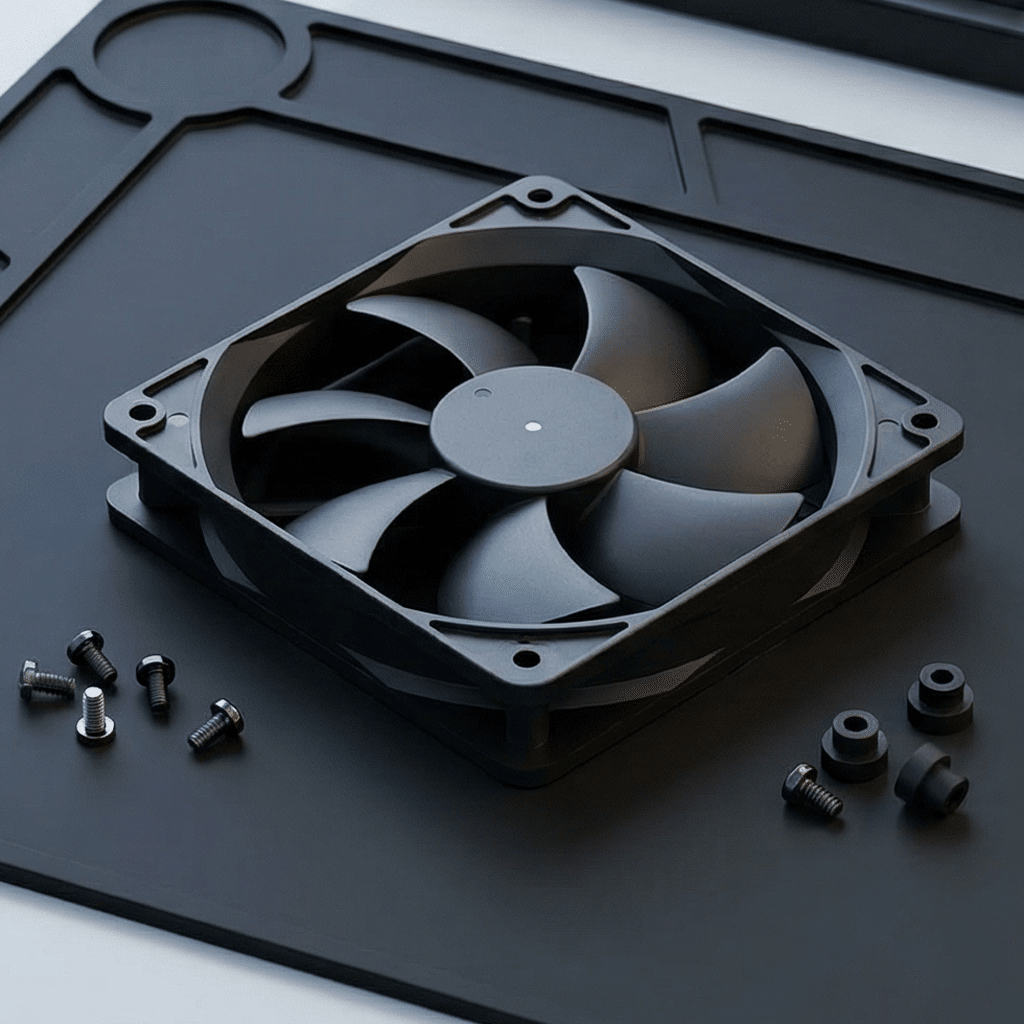
Cooling Fan Technology: Types, Working Principles and Applications
Cooling Fan Technology: Types, Working Principles and Applications
1. Introduction to Cooling Fan Technology
Cooling fans are essential components in countless applications, from consumer electronics to industrial machinery. These devices move air to dissipate heat, preventing equipment from overheating and ensuring optimal performance and longevity. The technology behind cooling fans has evolved significantly, with modern designs offering improved efficiency, reduced noise, and enhanced reliability.
Understanding cooling fan technology is crucial for engineers, technicians, and anyone involved in thermal management. This comprehensive guide explores the different types of cooling fans, their working principles, key specifications, and applications across various industries.
Did you know? The first electrically powered fans were developed in the 1880s, but the principles of forced air cooling date back to ancient civilizations that used hand-operated fans for ventilation and cooling.
2. How Cooling Fans Work: Basic Principles
At its core, a cooling fan operates on fundamental principles of fluid dynamics and thermodynamics. Here's how they work
2.1 Pressure Differential Creation
Cooling fans create a pressure difference between the inlet and outlet sides. As the fan blades rotate, they accelerate air molecules, creating a low-pressure area in front of the fan and a high-pressure area behind it. This pressure differential forces air to move from the high-pressure to the low-pressure area, creating airflow.
2.2 Heat Transfer Mechanism
The moving air carries thermal energy away from hot surfaces through convection. There are two main types of convective cooling:
- Forced Convection: When fan-driven air movement enhances heat transfer from surfaces
- Natural Convection: When heat rises naturally due to density differences (without fan assistance)
2.3 Motor Operation
Most modern cooling fans use brushless DC (BLDC) motors for efficiency and reliability. These motors use electronic commutation instead of physical brushes, reducing wear and enabling precise speed control.
3. Main Types of Cooling Fans
Cooling fans are categorized based on their airflow direction and internal design. The three primary types each have distinct characteristics suited to different applications.
3.1 Axial Fans
Axial fans are the most common type, characterized by airflow parallel to the fan's rotational axis. They move large volumes of air at relatively low pressure
Key Features:
- High airflow volume at low pressure
- Compact design with various sizes available
- Generally more energy-efficient for unrestricted airflow
- Widely used in electronics cooling, ventilation, and HVAC
Common Applications: Computer cases, electronics enclosures, room ventilation, condenser cooling
3.2 Centrifugal Fans
Centrifugal fans (also called blowers or radial fans) move air perpendicular to the intake axis, using centrifugal force to accelerate air outward from the impeller.
- Generate higher static pressure than axial fans
- Better suited for pushing air through restricted spaces
- More complex construction with scroll housing
- Quieter operation at comparable airflow rates
Common Applications: Air handling units, ducted systems, drying equipment, automotive ventilation
3.3 Mixed-Flow Fans
Mixed-flow fans combine features of both axial and centrifugal designs, creating diagonal airflow that offers a balance between airflow volume and pressure.
Key Features:
- Moderate airflow and pressure capabilities
- Compact design similar to axial fans
- More efficient than pure axial designs in restricted spaces
- Versatile for various applications
Common Applications: Compact electronics, automotive cooling, specialized ventilation systems
| Feature | Axial Fans | Centrifugal Fans | Mixed-Flow Fans |
|---|---|---|---|
| Airflow Direction | Parallel to axis | Perpendicular to axis | Diagonal (45° typically) |
| Static Pressure | Low to Medium | High | Medium |
| Airflow Volume | High | Medium | Medium to High |
| Noise Level | Medium to High | Low to Medium | Medium |
| Efficiency | High (unrestricted) | High (restricted) | Good (balanced) |
4. Key Specifications and Performance Metrics
Understanding cooling fan specifications is essential for proper selection and application. Here are the most critical parameters:
4.1 Airflow (CFM or m³/h)
Airflow measures the volume of air moved per unit of time, typically in Cubic Feet per Minute (CFM) or cubic meters per hour (m³/h). Higher CFM values indicate greater cooling capacity for open applications.
4.2 Static Pressure (mmH₂O or inH₂O)
Static pressure measures the fan's ability to overcome resistance, expressed in millimeters or inches of water column. This is critical for applications with filters, ducts, or heat sinks.
4.3 Acoustic Noise (dB)
Noise level is measured in decibels (dB). Lower dB values indicate quieter operation, which is important for office equipment, medical devices, and residential applications.
4.4 Power Consumption (W)
Power consumption in watts affects operating costs and heat generation. Energy-efficient designs reduce both electricity usage and additional cooling requirements.
4.5 Speed (RPM)
Rotations per minute (RPM) indicates how fast the fan spins. Higher RPM typically increases both airflow and noise levels.
4.6 Bearing Types
The bearing system significantly impacts fan lifespan and noise:
- Sleeve Bearings: Economical, quiet, but shorter lifespan
- Ball Bearings: Longer life, better high-temperature performance
- Fluid Dynamic Bearings (FDB): Very quiet, long lifespan, shock-resistant
5. Cooling Fan Applications Across Industries
Cooling fans serve critical roles in numerous industries and applications:
5.1 Electronics and Computing
From personal computers to server farms, cooling fans prevent overheating in electronic components. Specific applications include CPU coolers, GPU fans, power supply units, and rack-mounted server cooling.
5.2 HVAC Systems
Heating, Ventilation, and Air Conditioning systems use large fans for air circulation, heat exchange, and ventilation in residential, commercial, and industrial buildings.
5.3 Automotive Industry
Vehicles employ cooling fans for engine radiators, HVAC systems, brake cooling, and electronic control unit (ECU) temperature management.
5.4 Industrial Machinery
Manufacturing equipment, laser cutters, welding machines, and power converters all require specialized cooling solutions to maintain operational temperatures.
5.5 Medical Equipment
Medical devices like MRI machines, CT scanners, and laboratory equipment use precisely controlled cooling systems to ensure reliability and accuracy.
5.6 Renewable Energy
Wind turbine converters, solar power inverters, and battery storage systems all require thermal management for optimal performance and longevity.
6. Selection Guide: Choosing the Right Fan
Selecting the appropriate cooling fan involves considering multiple factors:
Selection Checklist:
- Determine required airflow (CFM) based on heat load
- Calculate static pressure requirements for your system
- Consider space constraints and mounting options
- Evaluate noise limitations for your application
- Check power supply compatibility (AC/DC, voltage)
- Assess environmental conditions (temperature, humidity, contaminants)
- Consider reliability requirements and expected lifespan
- Review control options (fixed speed, PWM, voltage control)
6.1 Airflow vs. Pressure Considerations
The relationship between airflow and static pressure is inverse - as system resistance increases, airflow decreases. Always consult fan performance curves to ensure the selected fan can deliver required airflow at your system's static pressure.
6.2 Environmental Factors
Consider operating environment when selecting fans:
- Temperature: High-temp applications require specialized bearings and materials
- Humidity: Moist environments may need conformal coating or specific materials
- Contaminants: Dusty or corrosive environments require sealed or specially protected fans
- Altitude: High-altitude applications may require derating as air density decreases
7. Maintenance and Troubleshooting
Proper maintenance extends fan life and ensures reliable operation:
7.1 Regular Maintenance Practices
- Clean fan blades and housings regularly to prevent dust buildup
- Check for unusual noises or vibrations indicating bearing wear
- Verify electrical connections remain secure
- Monitor performance degradation over time
7.2 Common Issues and Solutions
| Problem | Possible Causes | Solutions |
|---|---|---|
| Fan not spinning | Power failure, wiring issues, motor failure, seized bearing | Check power supply, inspect wiring, test/replace fan |
| Unusual noise | Bearing wear, debris in fan, imbalance, resonance | Clean fan, check mounting, replace if bearings worn |
| Reduced airflow | Dust accumulation, blade damage, motor speed reduction | Clean thoroughly, inspect blades, check voltage/speed |
| Vibration | Imbalance, bearing wear, loose mounting | Secure mounting, check for debris, replace if necessary |
7.3 Expected Lifespan
Fan lifespan varies by bearing type and operating conditions:
- Sleeve bearings: 30,000-50,000 hours
- Ball bearings: 50,000-100,000 hours
- Fluid dynamic bearings: 100,000+ hours
Pro Tip: Implement predictive maintenance by monitoring fan current draw. Increasing current often indicates bearing wear or mechanical issues before complete failure occurs.
Featured Products
Standard Axial Fans
High-airflow fans for general electronics cooling applications. Various sizes from 40mm to 200mm.
Features: Quiet operation, long-life bearings, PWM control
Applications: Computers, servers, telecom equipment
High-Pressure Centrifugal Blowers
Designed for restricted airflow paths and high static pressure requirements.
Features: Compact design, high pressure, multiple voltage options
Applications: Medical devices, laser equipment, projection systems
IP-Rated Waterproof Fans
Sealed fans for harsh environments with water, dust, or chemical exposure.
Features: IP55-IP68 ratings, corrosion-resistant materials
Applications: Outdoor electronics, food processing, marine
Ultra-Quiet Series
Specialty fans optimized for minimal noise in sensitive environments.
Features: As low as 15 dB, fluid dynamic bearings, rubber mounts
Applications: Audio equipment, medical, office environments
High-Temp Industrial Fans
Rugged fans designed for extreme temperature industrial applications.
Features: Rated to 100°C+, high-temp bearings, robust construction
Applications: Ovens, industrial machinery, engine compartments
Technical Support
Need help selecting the right fan for your application?
Our engineers can provide:
- Application-specific recommendations
- Custom design services
- Thermal analysis support
- Sample testing programs
Contact Us:
Phone: +86 188 2025 5739
Email:Rainieyu00@163.com
Website: www.szxqffan.com
Top 10 Cooling Fan Manufacturers in Mainland China
Industrial Cooling Fan Selection Guide- Durable Options for High-Temperature Environments
Related Article