Air Cooling vs. Water Cooling Fans: What is the Difference and Which One Suits You
Air Cooling vs. Water Cooling Fans: What’s the Difference and Which One Suits You?
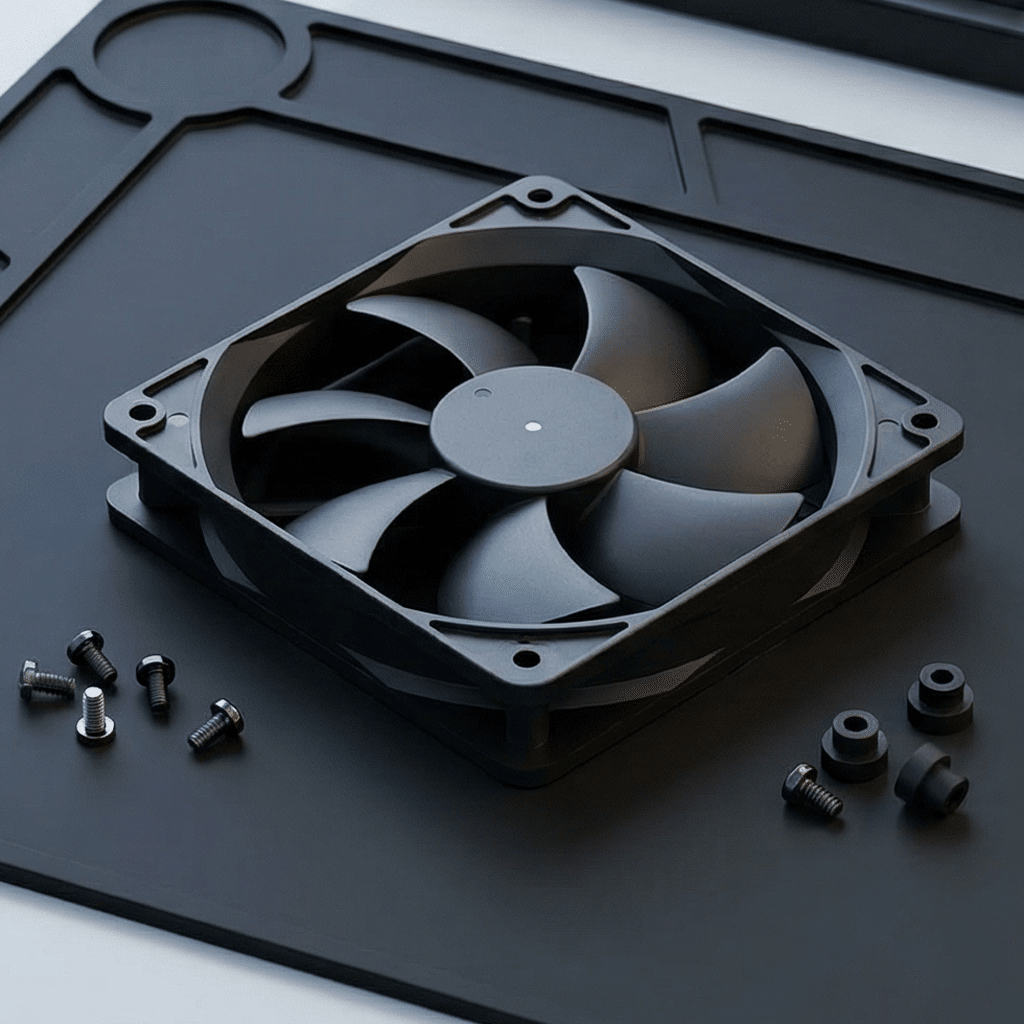
When it comes to thermal management, choosing between air cooling and water cooling systems is a critical decision for both casual users and industry professionals. At the heart of both systems often lies a cooling fan—a component that plays a vital role in dissipating heat efficiently. In this blog, we’ll break down the key differences between air and water cooling solutions, highlight when each is most appropriate, and introduce how Shenzhen Xinqifeng Technology Co., Ltd. delivers high-performance cooling fan options for both setups.

Understanding the Basics: Air Cooling Systems
How Air Cooling Works
Air cooling systems rely on a simple principle: using a cooling fan to circulate air across heat sinks, which absorb heat from components like CPUs or power supplies. The heat is then transferred to the surrounding air, which is pushed away by the cooling fan to prevent heat buildup. This setup is straightforward, consisting of a heat sink (usually aluminum or copper) and one or more cooling fans mounted directly onto the component.
Advantages of Air Cooling
- Cost-Effective: Air cooling systems are generally cheaper than water cooling setups, making them ideal for budget builds or basic cooling needs.
- Low Maintenance: With no liquids or complex tubing, air cooling requires minimal upkeep—just occasional cleaning of the cooling fan and heat sink to remove dust.
- Reliability: Fewer components mean fewer chances of failure. A high-quality cooling fan from a trusted manufacturer like Shenzhen Xinqifeng Technology Co., Ltd. can last for years without issues.
Limitations of Air Cooling
- Heat Dissipation Limits: Air cooling may struggle with high-performance components (e.g., overclocked CPUs or industrial machinery) that generate extreme heat.
- Size Constraints: Larger heat sinks and multiple cooling fans can take up significant space, making them unsuitable for compact devices.
Exploring Water Cooling Systems
How Water Cooling Works
Water cooling (or liquid cooling) uses a closed loop of tubes filled with coolant to transfer heat away from components. The coolant absorbs heat, flows to a radiator, and is then cooled by cooling fans mounted on the radiator before returning to the source. This system is more complex but offers superior heat transfer compared to air cooling.
Advantages of Water Cooling
- Superior Heat Dissipation: Water conducts heat more efficiently than air, making it ideal for high-heat environments, such as gaming PCs, data centers, or industrial equipment.
- Quieter Operation: Water cooling systems often use larger, slower-spinning cooling fans on radiators, resulting in lower noise levels compared to high-speed air cooling fans.
- Space Efficiency: While radiators require space, water cooling allows for more flexible component placement, making it suitable for compact builds where air flow is limited.
Limitations of Water Cooling
- Higher Cost: The complexity of pumps, tubing, and radiators makes water cooling more expensive upfront.
- Maintenance Needs: Over time, coolant may need replacement, and leaks (though rare with quality systems) can damage components.
- Installation Complexity: Proper setup requires careful tubing routing and leak testing, which may be challenging for beginners.
Which Cooling Solution Is Right for You?
Choose Air Cooling If:
You’re on a budget or need cooling for basic components (e.g., standard desktop PCs, small electronics). You prefer a low-maintenance, plug-and-play solution. Space is limited, but heat output is moderate. For these scenarios, a high-efficiency cooling fan from Shenzhen Xinqifeng Technology Co., Ltd.—such as their 120mm silent fan—delivers reliable performance without excessive noise.
Choose Water Cooling If:
You’re cooling high-performance components (e.g., overclocked CPUs, GPU workstations, or industrial machinery with high heat output). Noise reduction is a priority, and you’re willing to invest in a more complex system. You need efficient heat dissipation in a compact space. Pairing water cooling radiators with high-static-pressure cooling fans (like those offered by Shenzhen Xinqifeng) ensures optimal thermal performance.
Shenzhen Xinqifeng Technology Co., Ltd.: Your Partner for Cooling Fans
No matter which cooling system you choose, the quality of the cooling fan is paramount. Shenzhen Xinqifeng Technology Co., Ltd. specializes in manufacturing high-performance cooling fans designed for both air and water cooling setups. Their product range includes:
- High-airflow fans for air cooling heat sinks, engineered to maximize heat dissipation in compact spaces.
- Low-noise, high-static-pressure fans ideal for water cooling radiators, ensuring efficient coolant temperature reduction without excessive sound.
- Customizable solutions tailored to specific industrial or commercial needs, with options for different sizes, speeds, and IP ratings.
All fans from Shenzhen Xinqifeng undergo rigorous testing to ensure durability, efficiency, and long lifespan—critical factors for maintaining consistent cooling performance. To explore their full range of cooling fan products and find the perfect match for your air or water cooling system, visit www.szxqffan.com.
Conclusion
Air cooling and water cooling each have their strengths: air cooling is affordable and low-maintenance, while water cooling excels at handling extreme heat and reducing noise. The right choice depends on your budget, cooling needs, and technical expertise. Regardless of your decision, a high-quality cooling fan is essential for optimal performance.
Shenzhen Xinqifeng Technology Co., Ltd. stands out as a reliable provider of cooling fans for both systems, offering the durability and efficiency needed to keep your components running cool. For more information on their products, visit www.szxqffan.com today and find the perfect cooling solution for your needs.
Industrial Cooling Fan Selection Guide- Durable Options for High-Temperature Environments
How Long Do 12V DC Fans Last
Related Article