
How Do Industrial Equipment Combat High Temperatures— The Hardcore Applications of Cooling Fans in Manufacturing
author: Rainie
2025-06-16

Rainie YU
Cooling Fan Expert | XQF FAN Overseas Mgr
Specialize in DC FAN/AC FAN/EC FAN/Industrial Equipment Cooling Solutions Services
In the bustling workshops of the manufacturing industry, the rumbling of machine tools and the continuous operation of production lines showcase the high - efficiency of various industrial equipment. However, these devices face severe challenges posed by high temperatures. Excessive heat not only degrades equipment performance but may also trigger malfunctions, jeopardizing production safety and efficiency. At this moment, cooling fans emerge as the “hardcore weapons” for industrial equipment to combat high temperatures. From machine tools to automated production lines and new energy equipment, cooling fans play an indispensable role in complex industrial environments with their special designs and functions.
I. Machine Tools: Cooling Fans Ensure Precision Machining
In machining workshops, equipment such as CNC machine tools and machining centers generate substantial heat during long - term metal cutting operations. Components like motors, spindles, and driving devices are major heat sources. Take an automotive parts manufacturing factory as an example. When its five - axis machining center continuously processes engine cylinder blocks, the temperature of the spindle motor can soar above 80°C. Without effective temperature control, machining accuracy will decline, and the insulation layer of the motor may age prematurely, shortening the equipment's lifespan.
To address this issue, the factory employs high - temperature - resistant and high - static - pressure axial fans. These fans feature metal frames and high - temperature - resistant bearings, enabling stable operation even in environments up to 70°C. Their high - static - pressure characteristics allow them to penetrate the narrow cooling ducts inside machine tools and expel heat rapidly. Additionally, equipped with high - efficiency dust filters, these fans block metal debris and dust generated during machining, preventing them from entering the equipment and affecting heat dissipation or causing short circuits. Practical applications show that after installing these cooling fans, the temperature of key machine tool components drops by 15 - 20°C, the equipment failure rate decreases by 30%, and machining accuracy is effectively guaranteed.
II. Automated Production Lines: Cooling Systems Maintain Continuous Production
Automated production lines operate 24/7, with a dense distribution of electronic devices such as PLC control cabinets, servo drives, and frequency converters, making heat dissipation requirements more complex. Consider a 3C product assembly automated production line with hundreds of control units. In summer, when the workshop temperature exceeds 35°C, equipment malfunctions such as freezes and program errors are likely to occur due to poor heat dissipation, halting the entire production line.
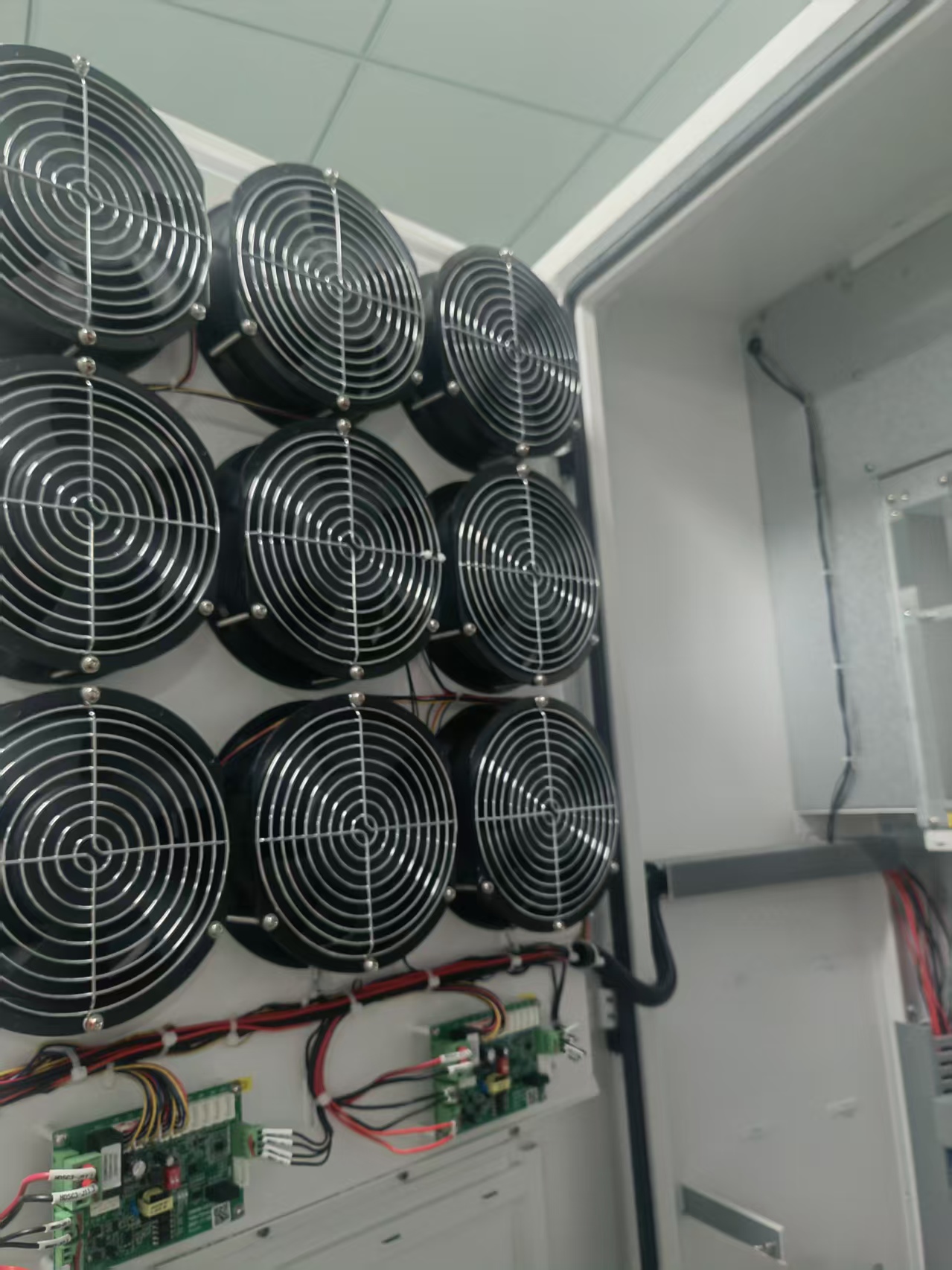
To tackle this situation, the production line adopts a “centralized heat dissipation + localized enhancement” solution. Inside electrical control cabinets, low - noise and highly reliable centrifugal fans are installed. Through a rational layout, internal air ducts are formed to centrally expel heat. For key heat - generating equipment, such as high - power servo drives, additional heat dissipation modules are equipped, and micro blowers are installed for targeted forced heat dissipation. Moreover, given the large amount of plastic debris and electrostatically - adsorbed dust generated during production line operation, all fans are fully enclosed with an IP65 protection rating, effectively preventing dust intrusion. After the transformation, the annual downtime of the production line due to equipment overheating is reduced by approximately 200 hours, significantly improving production efficiency.
III. New Energy Equipment: Heat Dissipation Technologies Promote Green Development
In the new energy sector, equipment like lithium - battery production facilities, photovoltaic inverters, and wind turbine converters also have stringent heat dissipation requirements. Take a lithium - battery production workshop as an example. During the operation of coating machines and winding machines, processes such as lithium - battery electrode coating and cell winding generate a great deal of heat. Improper temperature control may affect the performance and safety of lithium batteries.
A lithium - battery manufacturing enterprise has introduced an intelligent temperature - controlled heat dissipation system. Centered around high - temperature - resistant and high - protection - grade axial fans, this system integrates temperature sensors and intelligent controllers. When the equipment temperature rises, the sensors send signals to the controller, which automatically adjusts the fan speed for precise heat dissipation. As the temperature drops, the fan speed decreases, reducing energy consumption. Meanwhile, the surface of the fans is specially coated to resist corrosive chemicals that may be encountered during lithium - battery production. In the field of wind power generation, the converters of offshore wind turbines are exposed to harsh environments with high temperatures, humidity, and salt spray. The cooling fans used here not only possess excellent high - temperature resistance but also feature anti - salt - spray corrosion and vibration - resistance properties, ensuring stable operation under extreme conditions.
In the high - temperature battlefield of the manufacturing industry, cooling fans, with their high - temperature resistance, dust resistance, and intelligent features, have built a reliable heat dissipation defense line for various industrial equipment. With the continuous advancement of industrial technology, the performance requirements for cooling fans will continue to rise. In the future, more efficient and intelligent heat dissipation solutions will empower the manufacturing industry to develop towards higher quality and greater sustainability.

The Unconventional Duties of Cooling Fans: A Showcase of Surprising Applications from Medical Equipment to Agricultural Greenhouses
Environmental Protection and Energy Efficiency-How Cooling Fans Contribute to Carbon Neutrality
Related Article
hoose a cooling fan at the operating point where its published performance curve meets the resistance of the finished equipment—not at the fan’s maximum free-air CFM.
How Do You Choose a Cooling Fan by Static Pressure and Airflow

Set cooling fan airflow so cool supply air reaches the highest-heat components first and hot air exits without returning to the intake. Verify the airflow arrow molded on the fan frame, not the visible blade shape.
How Do You Set Cooling Fan Airflow Direction in Electronic Equipment?

An axial fan is usually better for moving a large volume of air through a low-resistance enclosure, while a centrifugal blower is usually better when air must pass through dense heat sinks, filters, narrow ducts or other high-resistance components.
Axial Fan vs Centrifugal Blower- Which Is Better for Electronics Cooling